
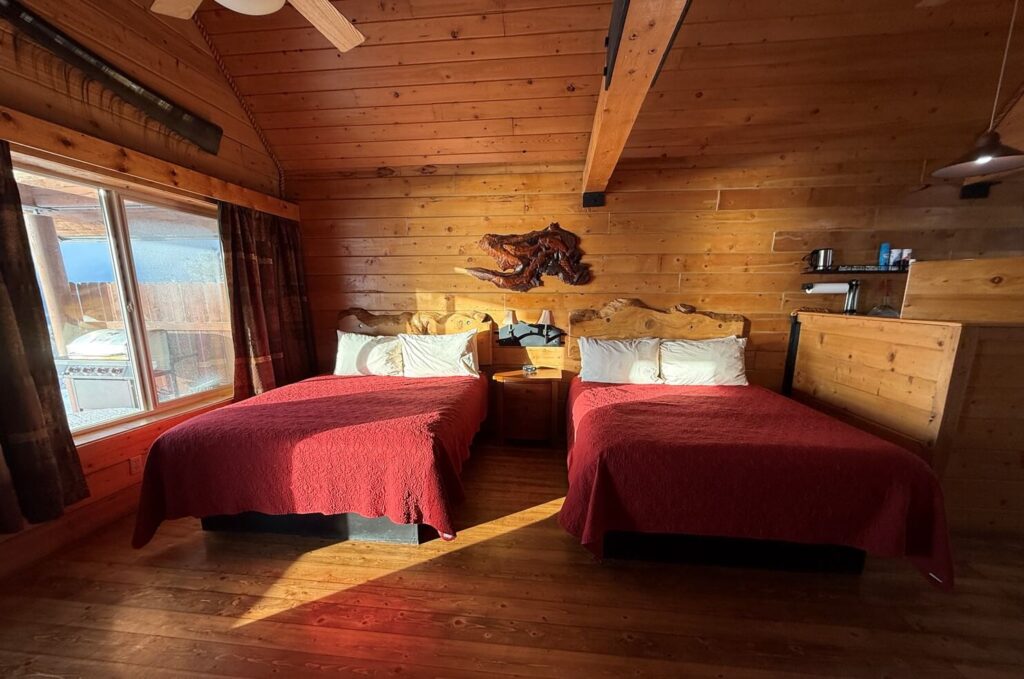
The cabin is named the “Salmon Cabin” in respect to the importance of the Salmon to Alaska!
Amenities
- 2 Queen-size beds
- Kitchenette with a full Refrigerator, cooking utensils, including pots and pans, with place settings
- Full bathroom
- Large screen 50” or larger TV with streaming
- Youtube TV
- Dining room with table and chairs
- Full Grill for each cabin
- 14’ Hot Tub for all 6 cabins
- Firepit
- Fireplace Appliance
- Back porch with chairs to enjoy the view
- Combined bedroom and living room
- Free Wifi
- Ocean view
- Free parking
- 457 sq ft
- Can sleep 5 with the 5 th using a provided rollaway
Click to enlarge Gallery:

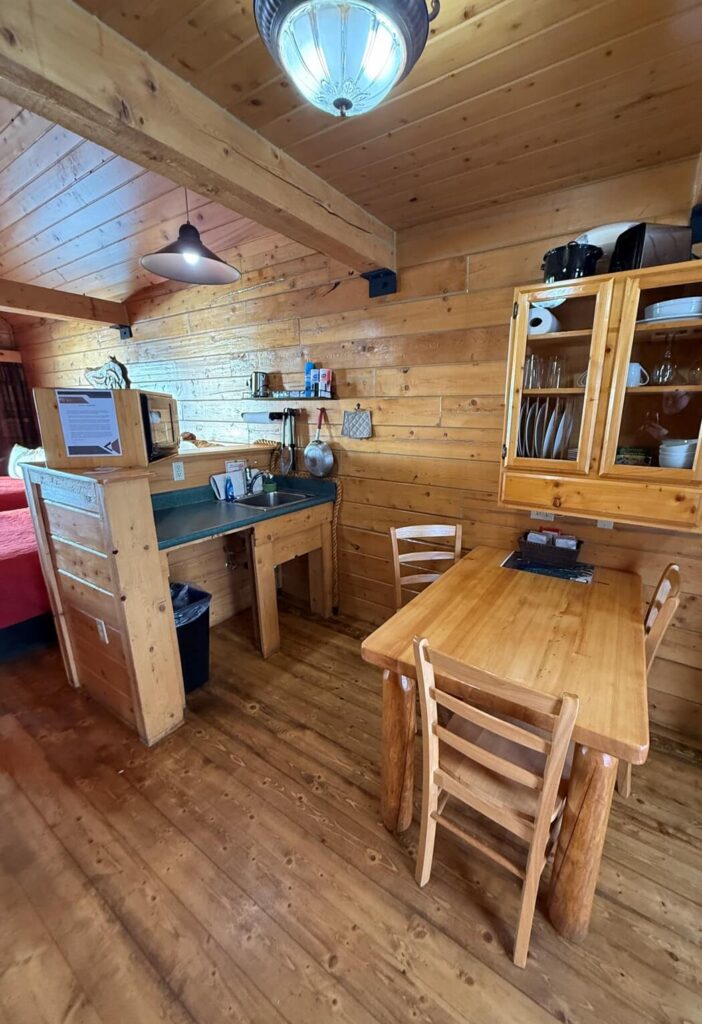
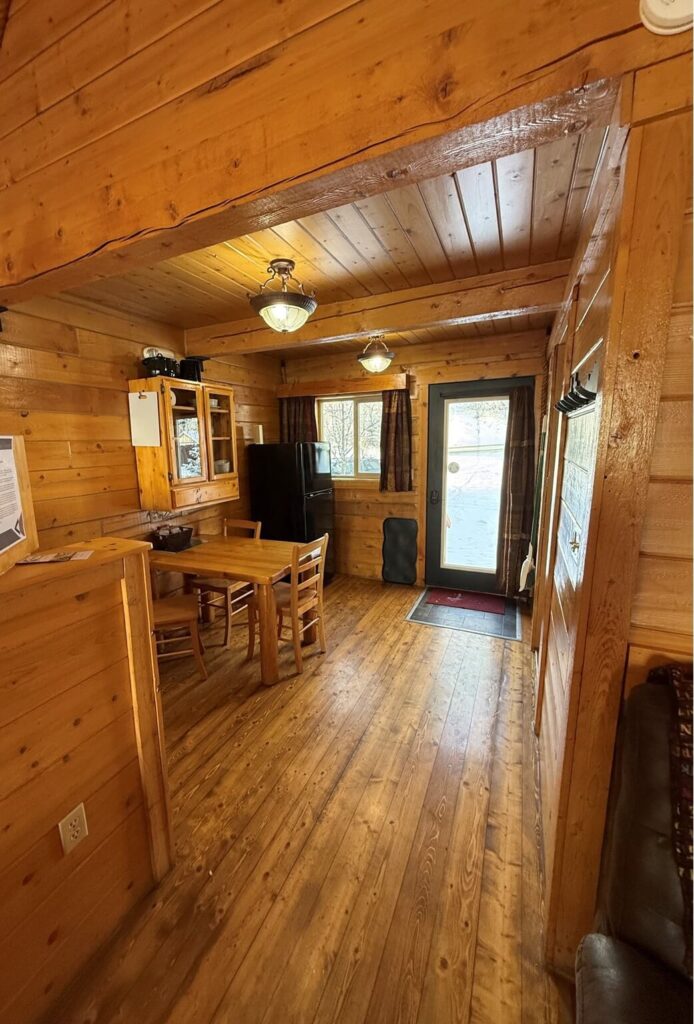
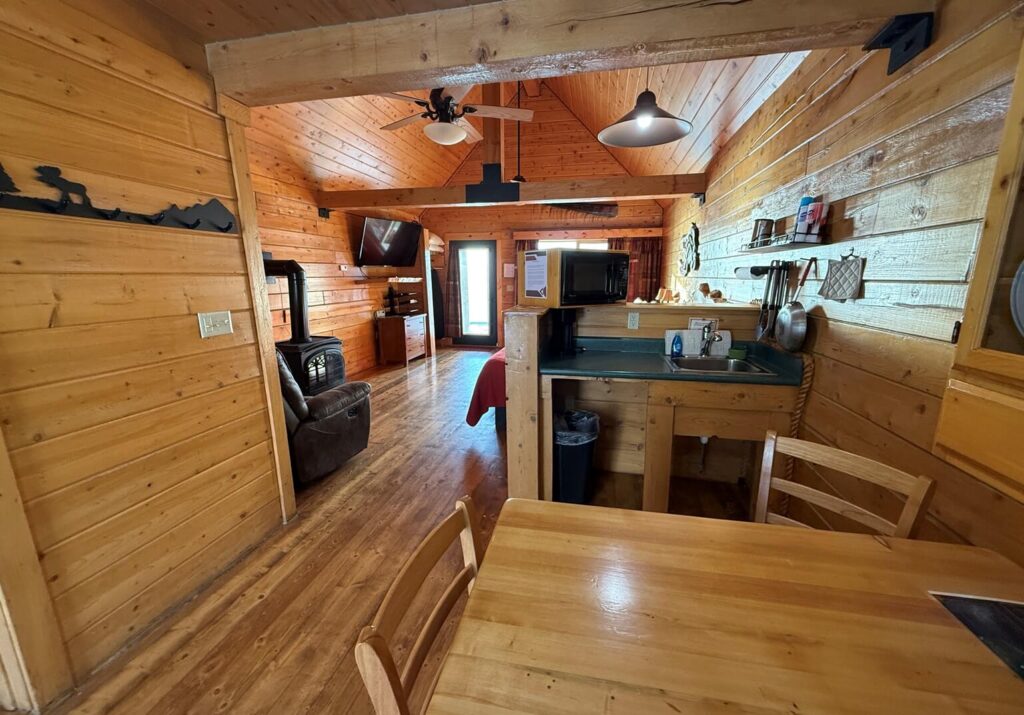
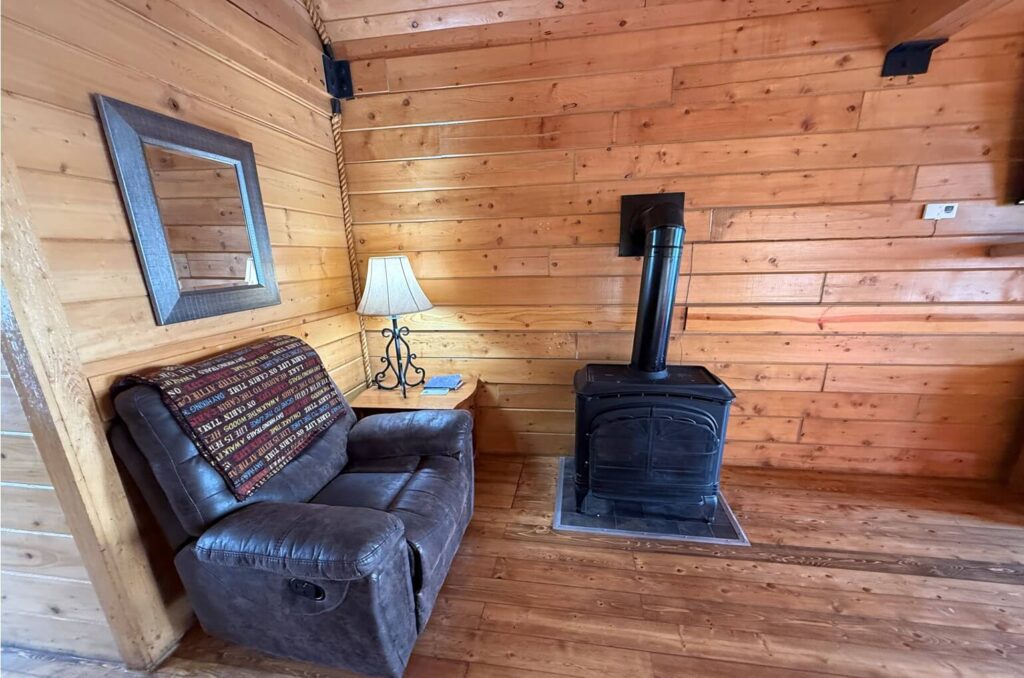
Salmon play a huge role in Alaska. It is estimated that salmon provide 90lb of fish per person per year to the subsistence diet in rural Alaska. On the western coast and interior rivers, salmon provide approximately 200lb per person per yr.
This valuable resource is highly managed by the Alaska Department of Fish and Game (ADF&G). The ADF&G website, https://www.adfg.alaska.gov/static/home/library/pdfs/ak_wild_salmon.pdf shares the guiding principles they follow relative to the management of salmon!
- Protect wild populations and their habitat.
- Allow enough escapement to sustain production and maintain the ecosystem
- Regulate human activities that affect salmon
- Involve the public
- Where there is uncertainty, manage conservatively
The ADF&G department was created as a cabinet-level department. It is run by a commissioner who reports directly to the governor. The role is responsible for managing, protecting, maintaining, and improving the fish, game, and aquatic plant resources of the state in the interest of the economy and the general well-being of the people of the state. (from ADFG website) The success of this management is apparent when one realizes that wild Pacific salmon and intact salmon-producing ecosystems are not threatened or endangered!
There are 7 different Pacific Salmon species in Alaska. When an Alaskan talks to you about salmon, they are talking about the anadromous salmon, Chinook, Sockeye, Coho, Pinks, and Chum, not the Rainbow or Cutthroat trout. These salmon are born in fresh water and then migrate to saltwater to grow. A fish being anadromous is rare in bony fish.
Chinook, or as Alaskans call them, Kings, are the largest of the Alaskan salmon. They have been known to exceed 6’ in length and live to be up to 9 yrs old. Typical weights are 20 to 40lb. The largest sport record king was caught on the Kenai River in 1985 at 97lb. The largest commercial King harvested was in a fish trap near Petersburg, which is located in southeastern Alaska.
If you ask an Alaskan, most will agree that the Red Salmon is the best-tasting salmon found in Alaska. They typically reach 4 to 8lb and 19 to 24” long. The word sockeye is believed to have come from the indigenous Salish people of Canada, suk-kegh, which means red fish.
Coho or Silvers to the Alaskans is the last salmon run of the summer, while the Kings are the first. Slivers are usually 8 to 12 lbs and 24 to 30” long.
The smallest salmon, 3-4 lbs, is the Pinks, Humpback, or Humpies salmon. These fish are quite well recognized by most people. The males develop a pronounced hump before spawning. This species dominates the Alaska hatcheries, with 900 million fry per year released. This release quantity results in on average 45 million returning during the annual spawn.
Finally, the Chum or Dog Salmon. These salmon are known for being fighters. These are a major source of dried fish. They are 7 to 8 lb fish at 24 to 32” long. Like the Pinks following hatching, the fry migrate to the sea rather than spend up to a year in freshwater.
Everyone knows that following the spawn, the spawning salmon die. Just like the salmon themselves, the carcasses provide too. An interesting fact is that the decaying salmon themselves sometimes help, providing up to 50% of the food for the hatching salmon eggs. Caddisfly (larvae) feed on the carcasses, and these are eaten by the hatchlings. The carcasses also provide for wildlife, such as bears, wolves, eagles, small birds, weasels, and insects.