
Amenities
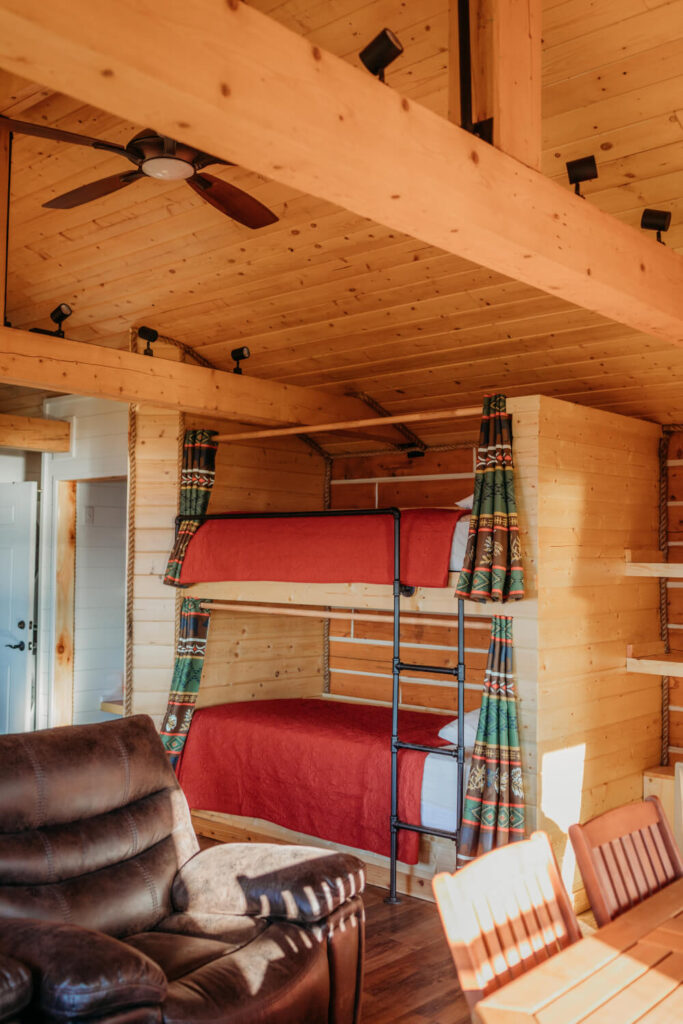
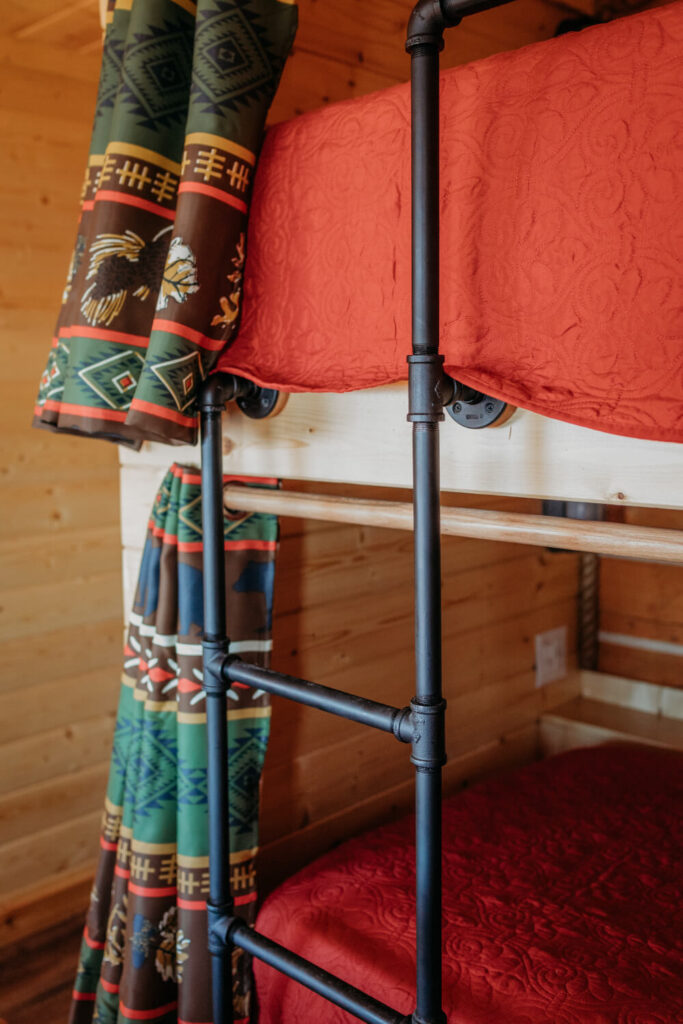
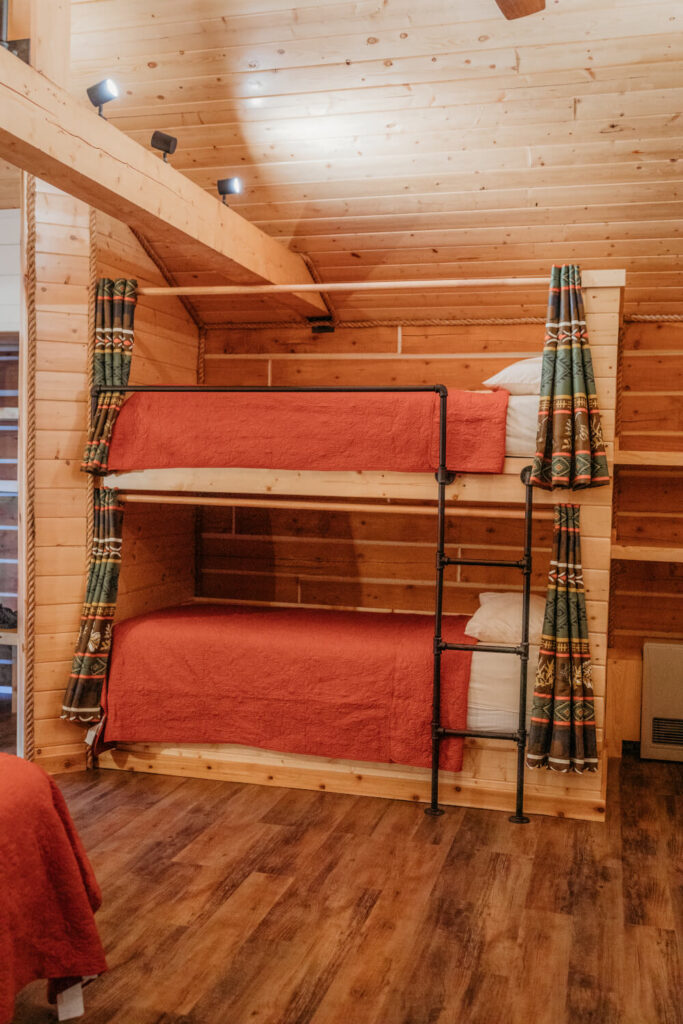
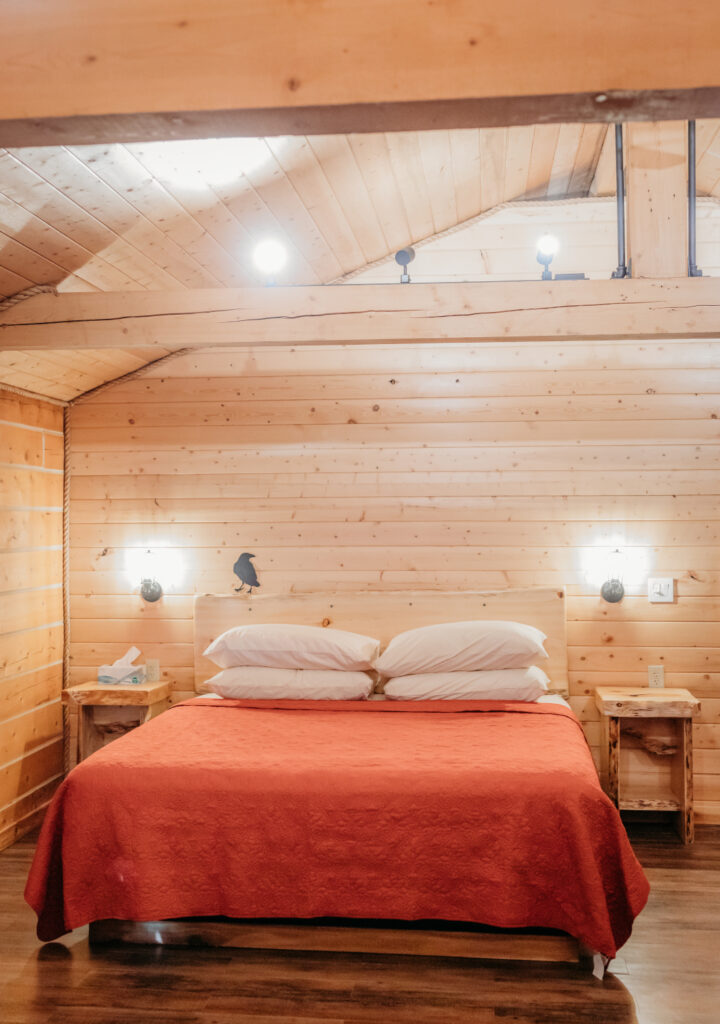
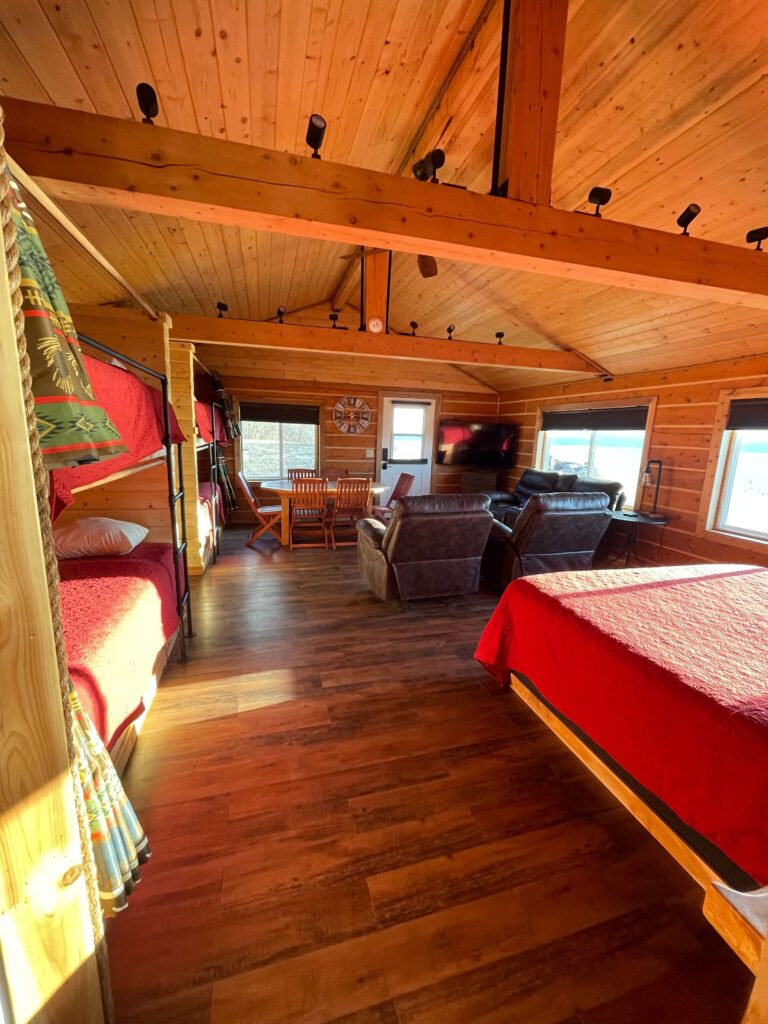
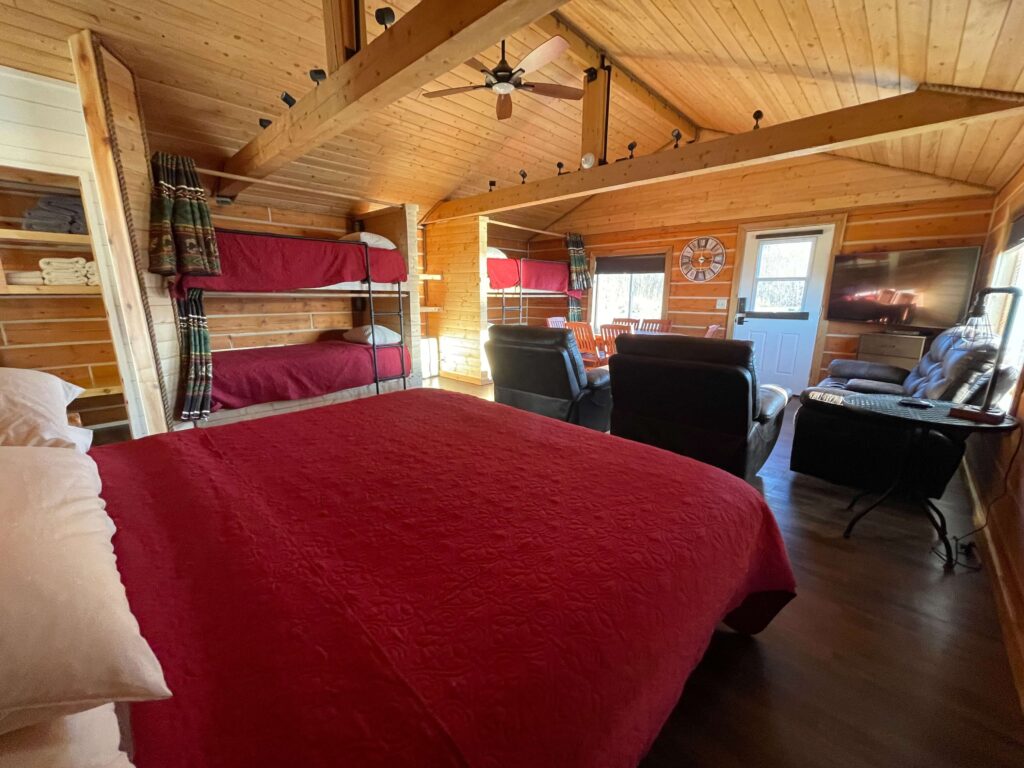
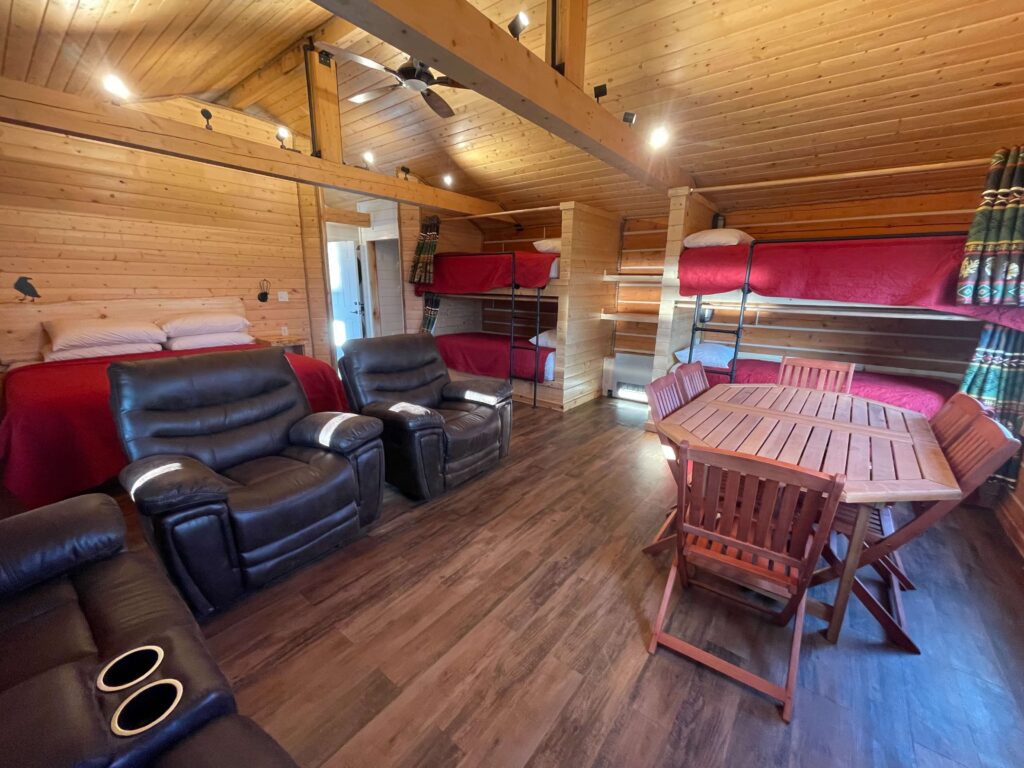
- 1 King bed, 4 extended twin beds
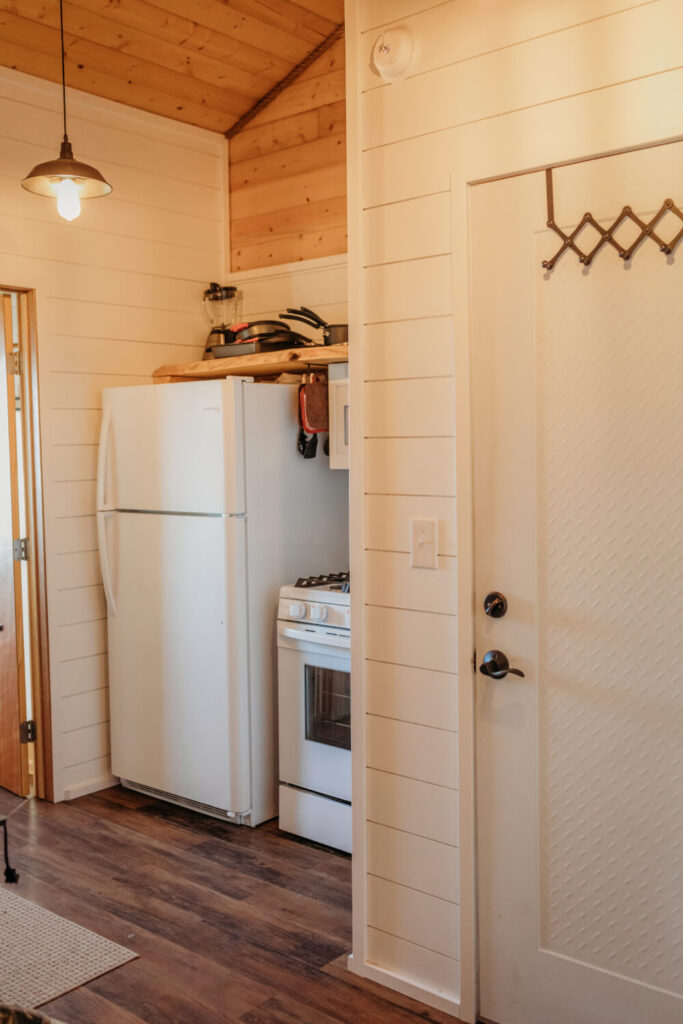
- Full Kitchen with full Refrigerator, cooking utensils, including pots and pans, with place settings
- Full bathroom
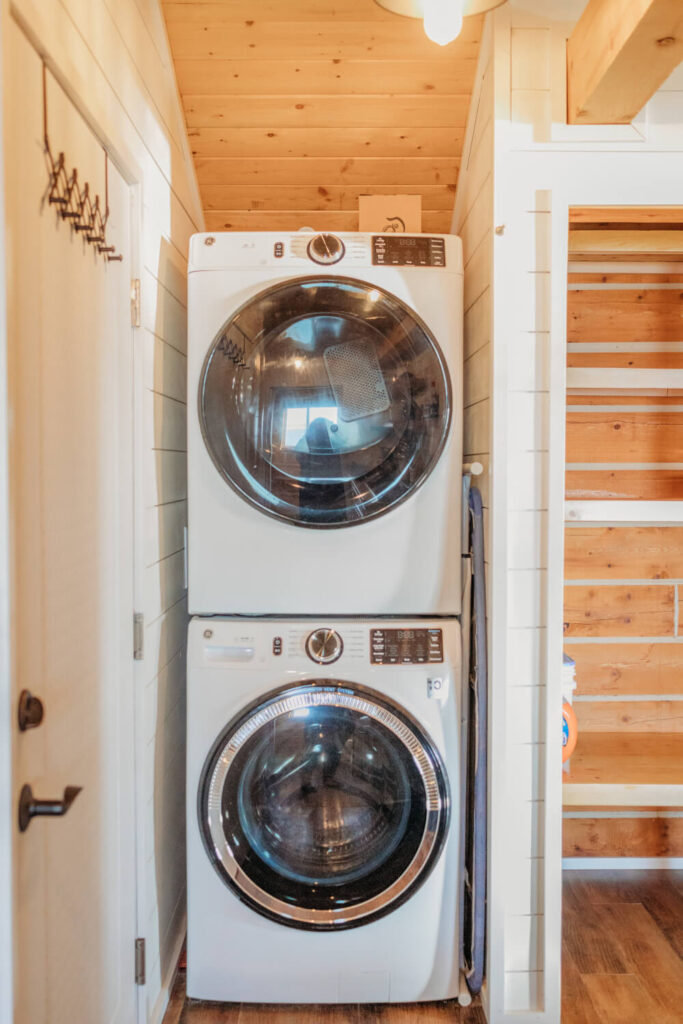
- Full Laundry in the cabin
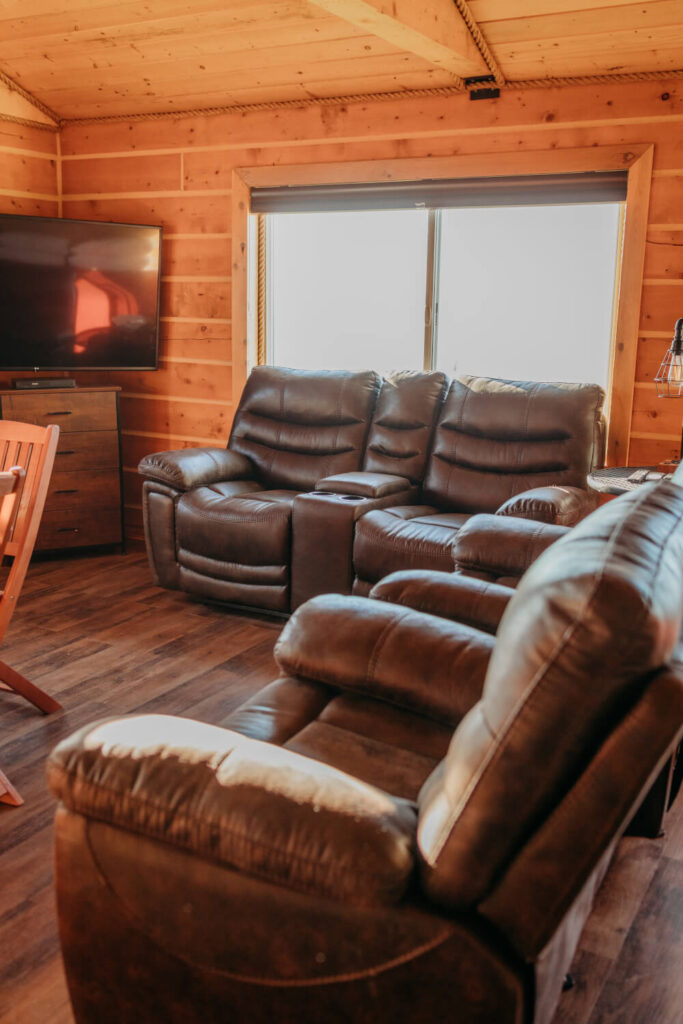
- Large screen 50” or larger TV with streaming
- Youtube TV
- Dining room with table and chairs
- Full Grill for each cabin
- 14’ Hot Tub for all 6 cabins
- Combined bedroom and living room
- Free Wifi
- Ocean view
- Free parking
- 750sqft
- Can sleep 7 with the 7 th using a provided rollaway
- Firepit
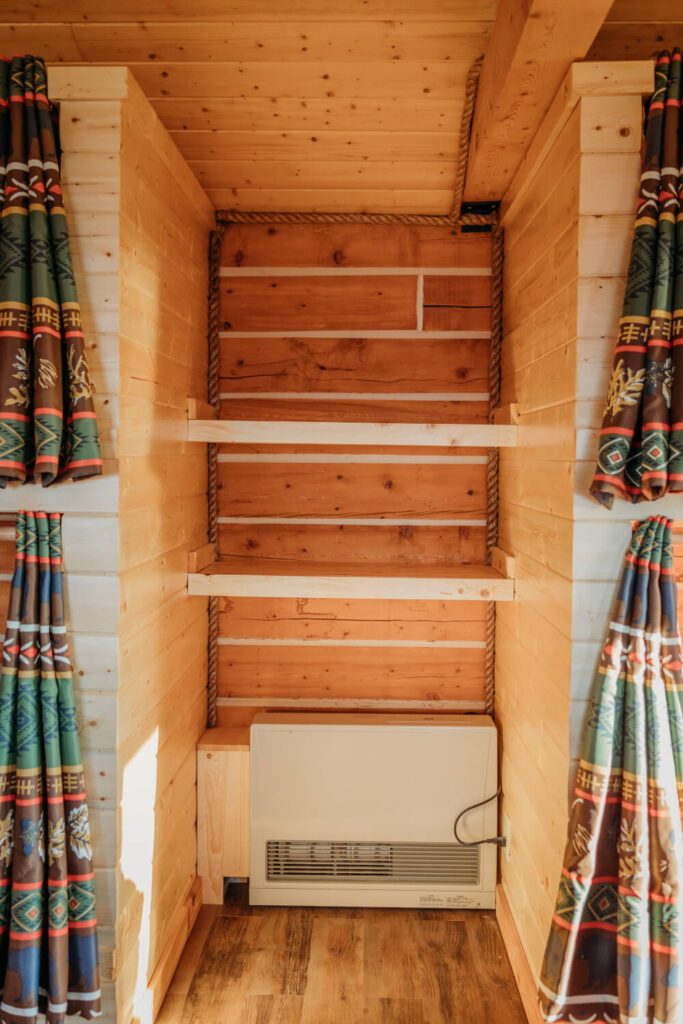
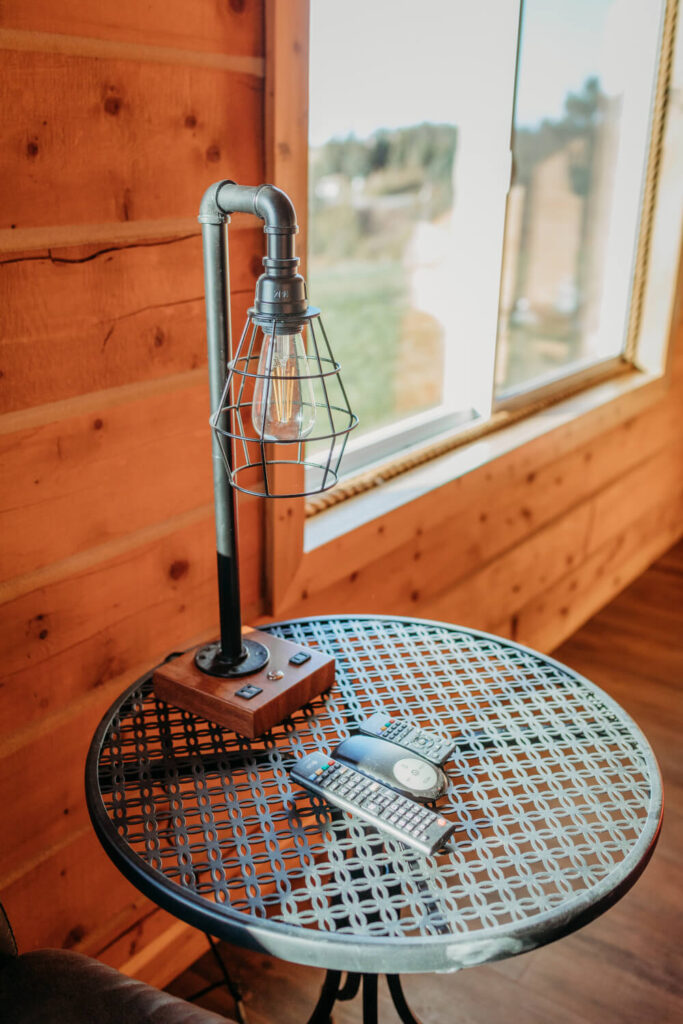
Click to enlarge Gallery:









When you are in Alaska, you may think you are seeing a crow. The only range of crows in Alaska is along the coastline in southeast Alaska. So, more than likely, the bird you are seeing is a Raven, a crow’s big brother, more than 50% bigger. That Raven you are seeing overhead can have an over 4’ wing span and is the largest member of the perching birds or songbirds, which puts their size closer to a hawk. Of course, when you hear a Raven fussing at you, it does not sound like a song!
A murder of crows can be as large as a 1000 birds. The raven is not that sociable. They are either solitary or in a family group called an unkindness of ravens. They also prefer the wild vs being around people. Being omnivores means that, like pigs, they can eat plants and animals. However, the raven’s diet is made up of more meat than the crow’s, including bugs, small birds, eggs, and rodents. They also scavenge. They will tolerate people if it means they get scraps. So, you will often see them around trash and dumps.
Ravens are very smart. They have been known to take vengeance on people who mistreat them. They can remember a human face up to 5 years. So, don’t mess with a raven. They will steal from you and torment you just to get even. This behavior makes you wonder if it is what led to Daphne du Maurier writing the short story that inspired Alfred Hitchcock’s movie “The Birds”.
Their courtship can be spectacular. The male will go through spectacular aerial acrobatics to impress the female. You might see them doing barrel rolls and even flying upside down. However, unlike crows, the nest building is really up to the female. The male may bring a few sticks, but the 2-foot-high by 5-foot-wide nest is all up to the female. The female will lay a clutch of eggs ranging in size from 3 to 7 eggs. The eggs are multicolored and are either green or olive, blotched with olive or brown. The incubation is 18 to 21 days. This is done almost exclusively by females. The male will bring food for the young. Fledglings will leave the nest after 5 to 6 weeks.
A mated pair will establish and protect a territory and defend it. They have established territory from the Arctic down to the deserts in the southwest United States.
Ravens have a long life span of 30 years in the wild and up to 40 to 50 years in captivity. They are also noted in history. There is a group of ravens, 6 to 8, that reside at the Tower of London in England. The local legend is that if the ravens leave, the Crown will fall and Britain with it. American author Boria Sax claims that the ravens at the tower pecked out the eyes of the severed head of the queen, Lady Jane Grey.
References:
https://www.allaboutbirds.org/news/the-young-and-the-restless-watching-neighborhood-crows/
https://www.allaboutbirds.org/guide/Common_Raven/overview