
Amenities
- 2 Queen-size beds
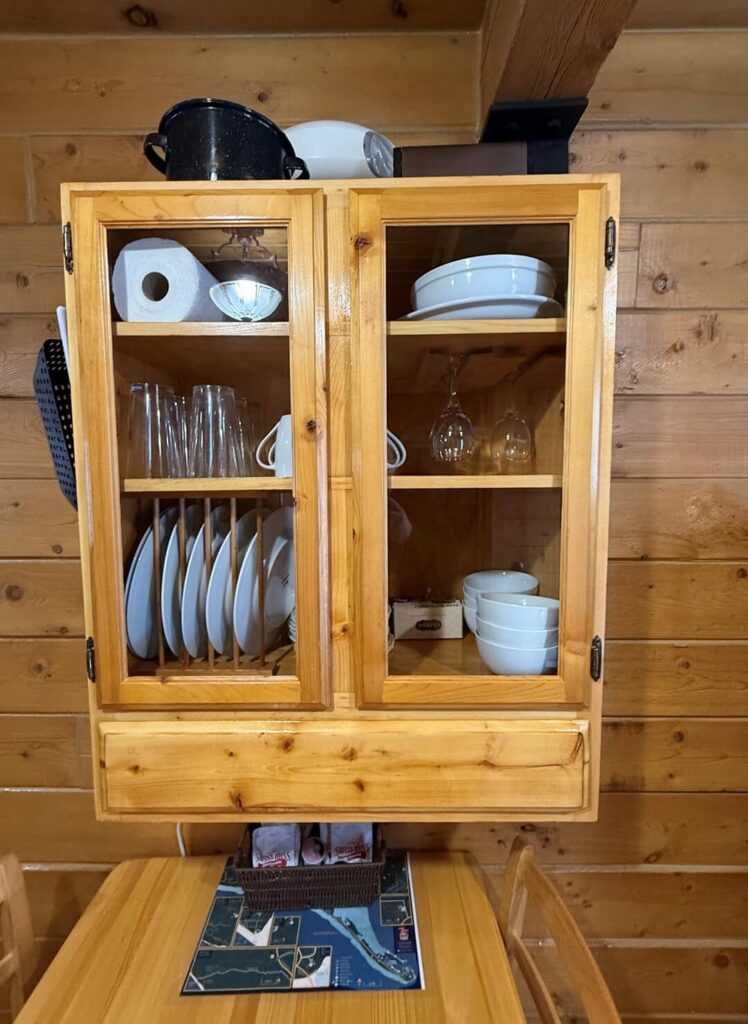
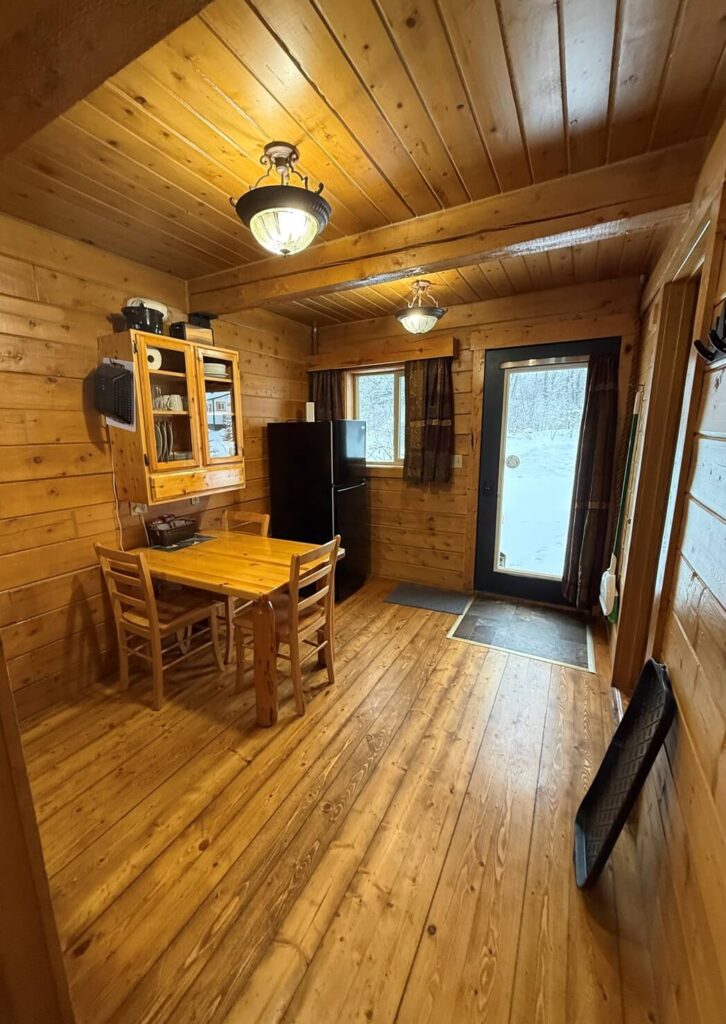
- Kitchenette with a full Refrigerator, cooking utensils, including pots and pans, with place settings
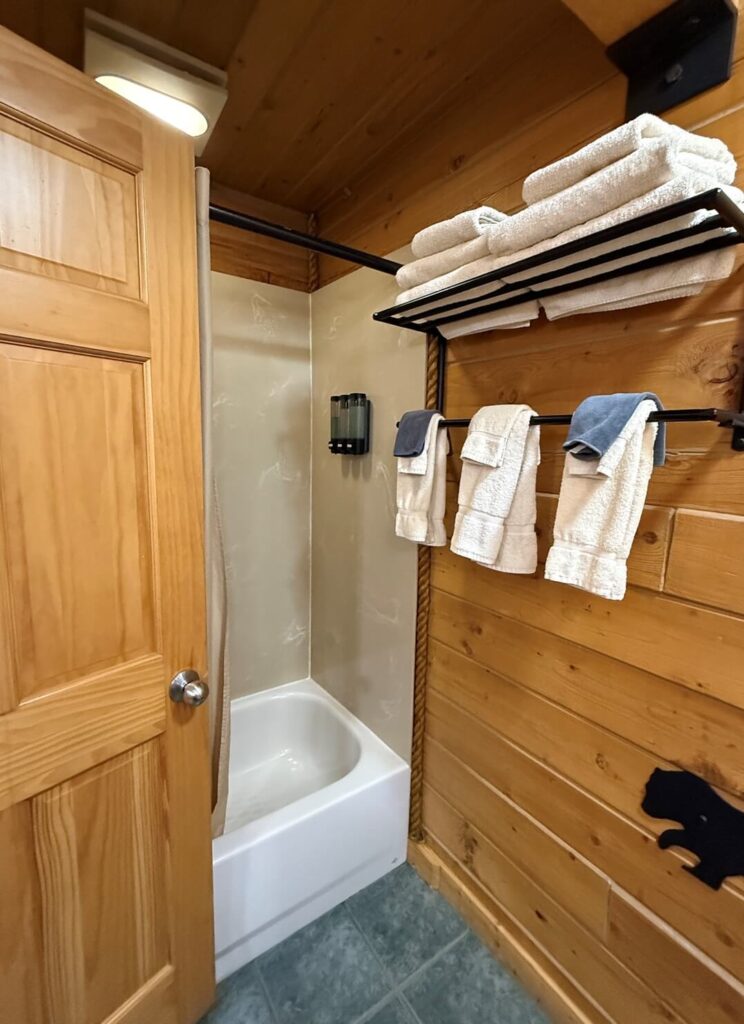
- Full bathroom
- Large screen 50” or larger TV with streaming
- Youtube TV
- Dining room with table and chairs
- Full Grill for each cabin
- 14’ Hot Tub for all 6 cabins
- Firepit
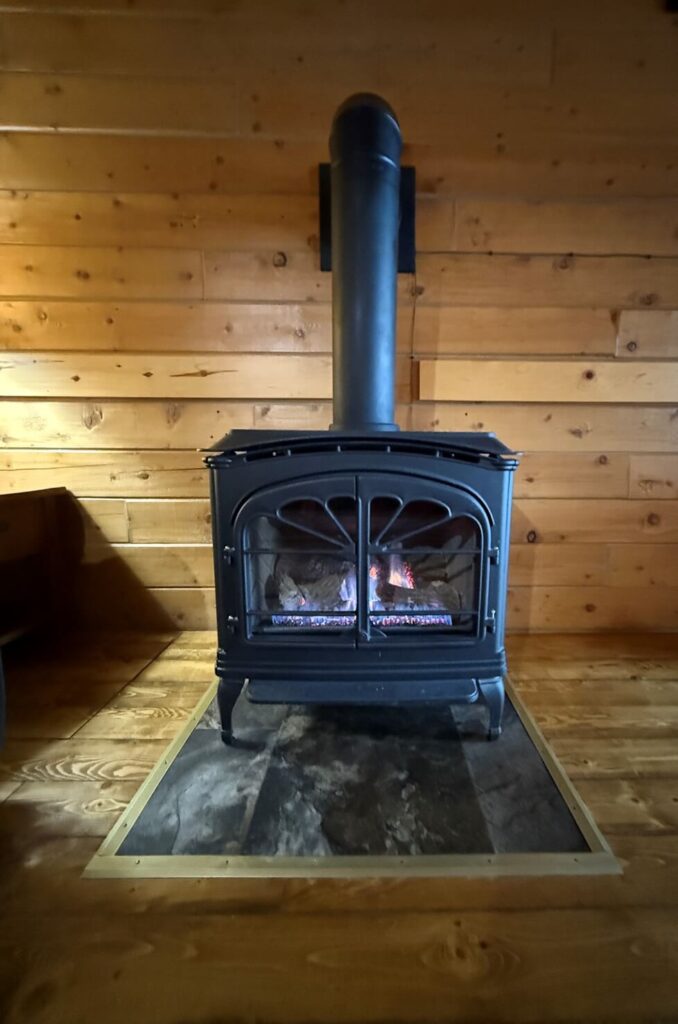
- Fireplace Appliance
- Back porch with chairs to enjoy the view
- Combined bedroom and living room
- Free Wifi
- Ocean view
- Free parking
- 457 sq ft
- Can sleep 5 with the 5 th using a provided rollaway
Click to enlarge Gallery:
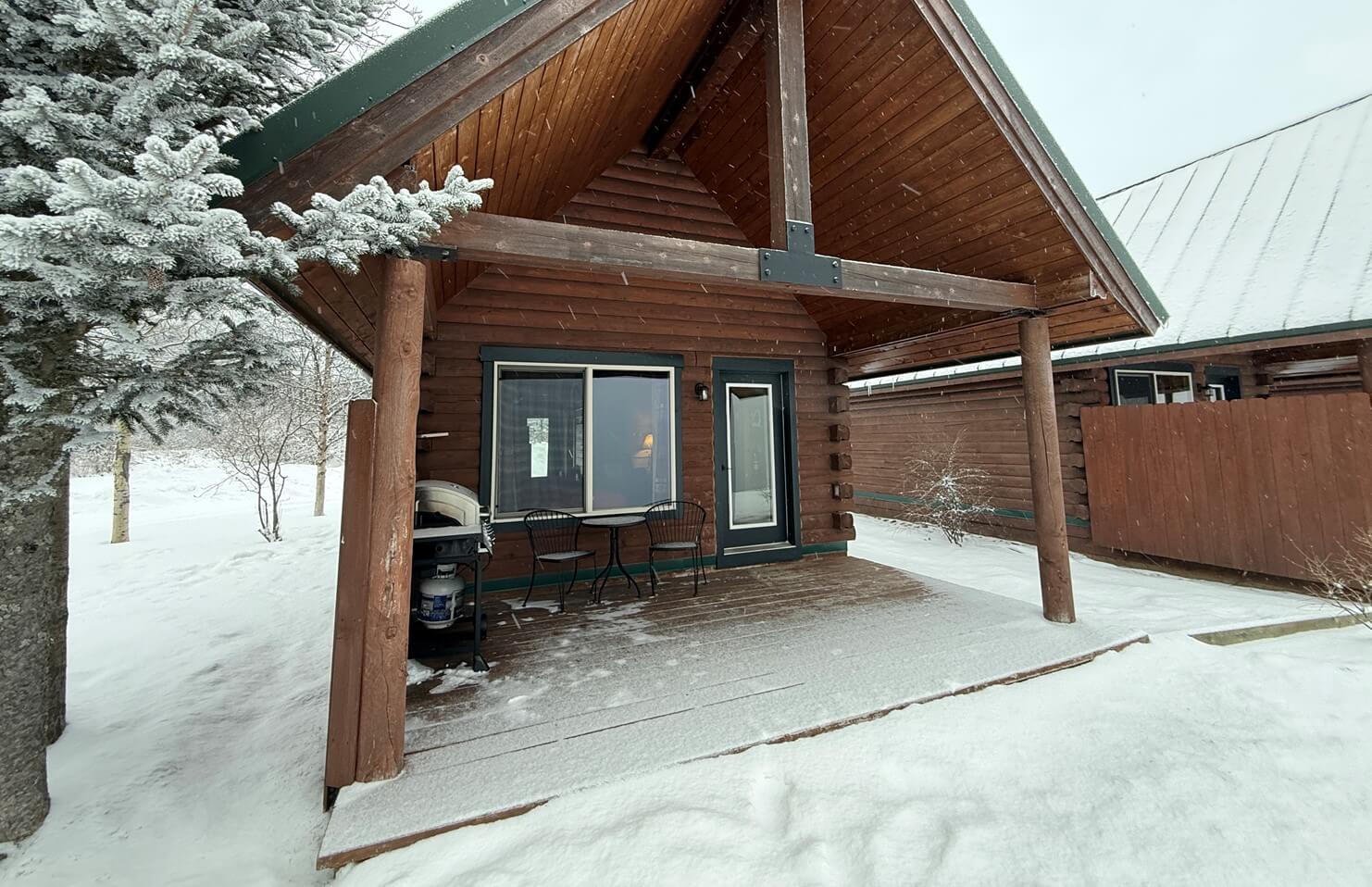
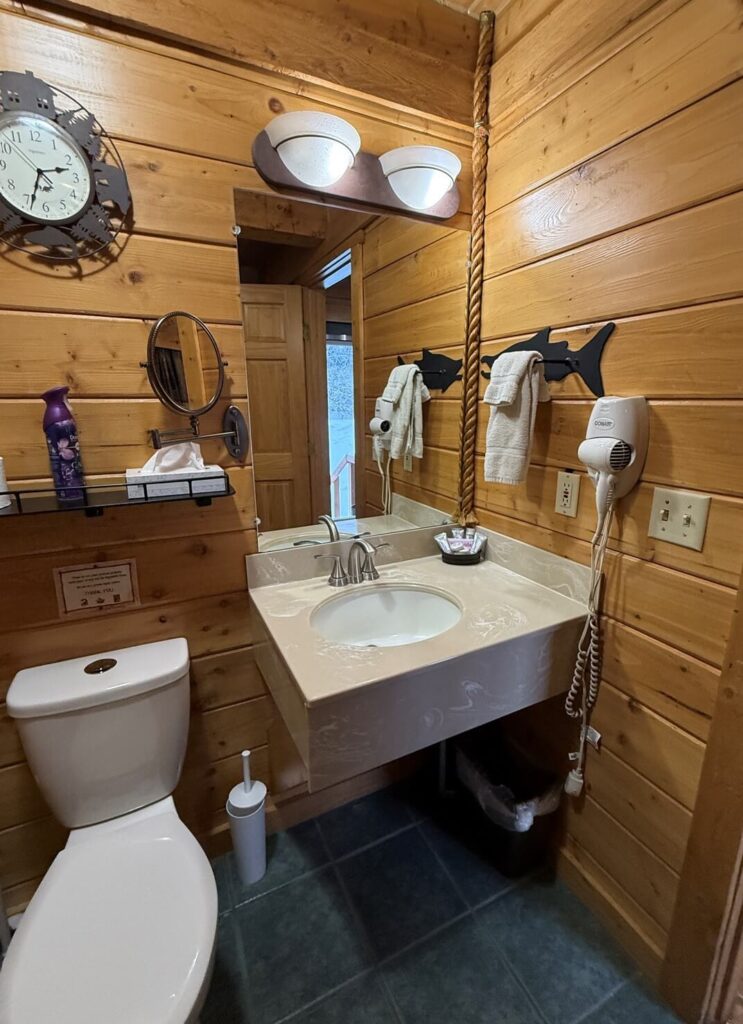
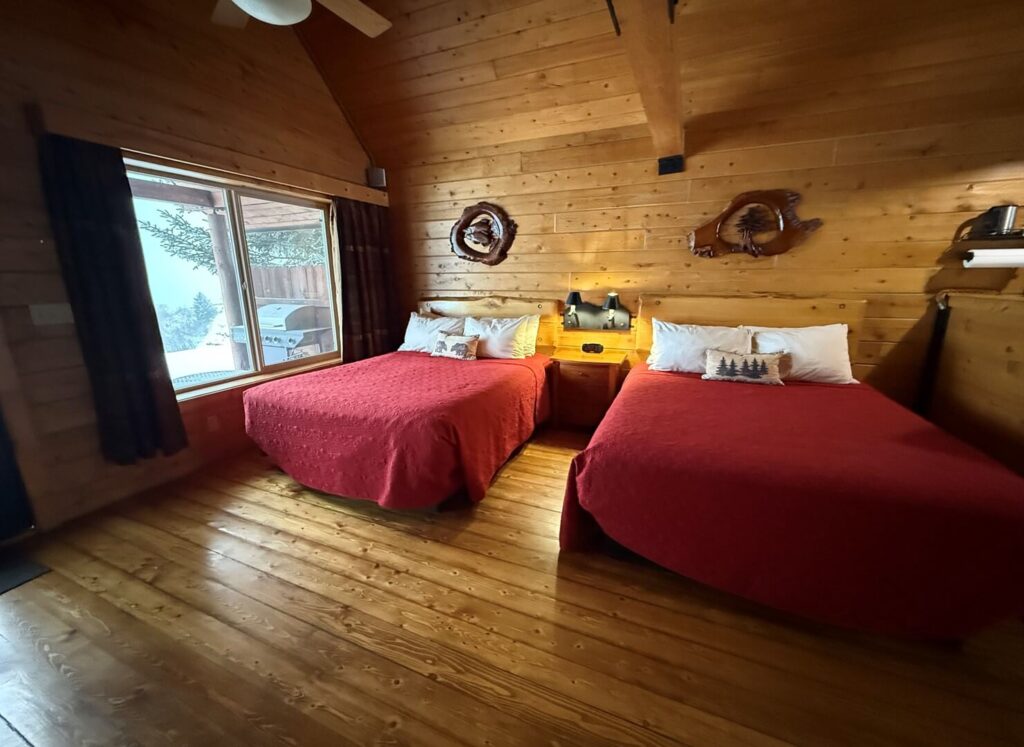
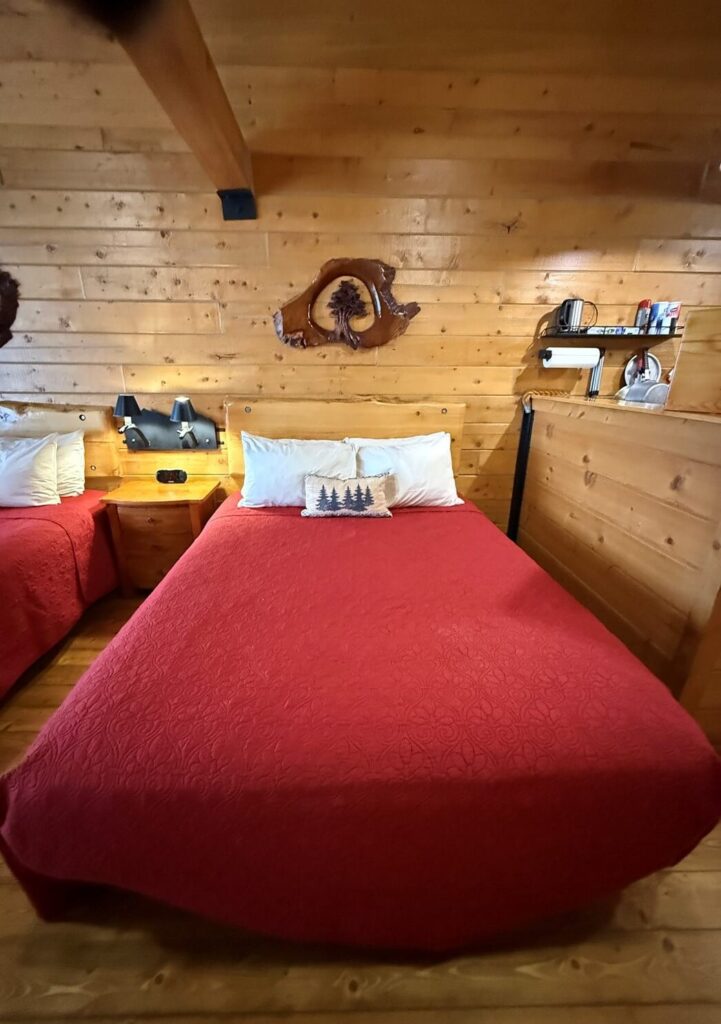
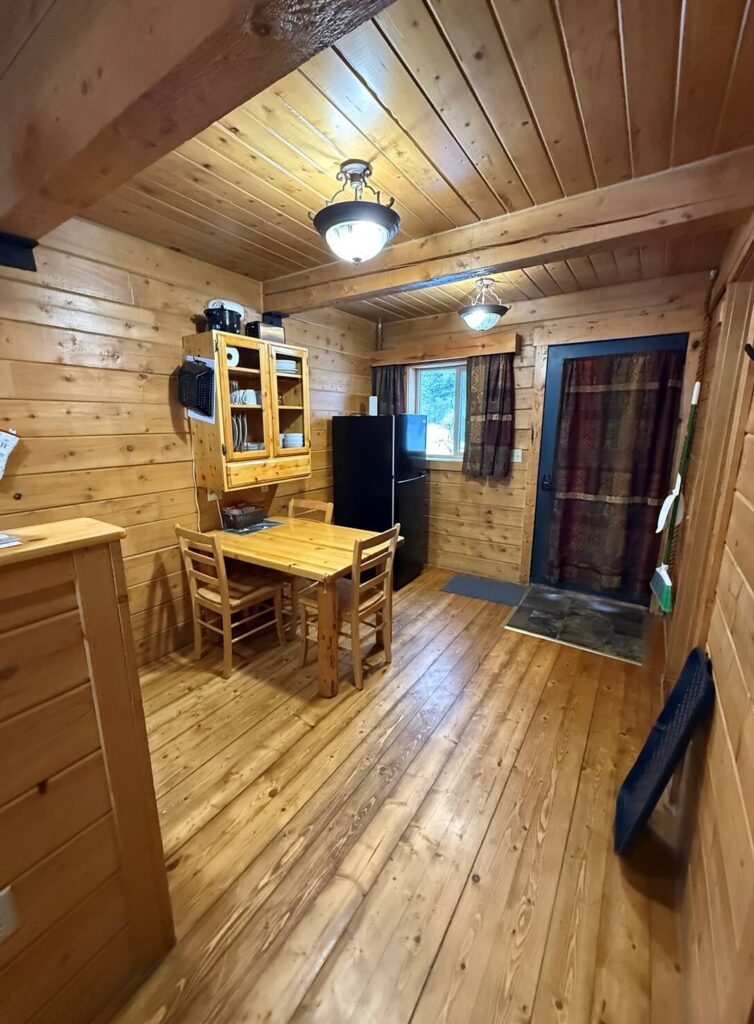
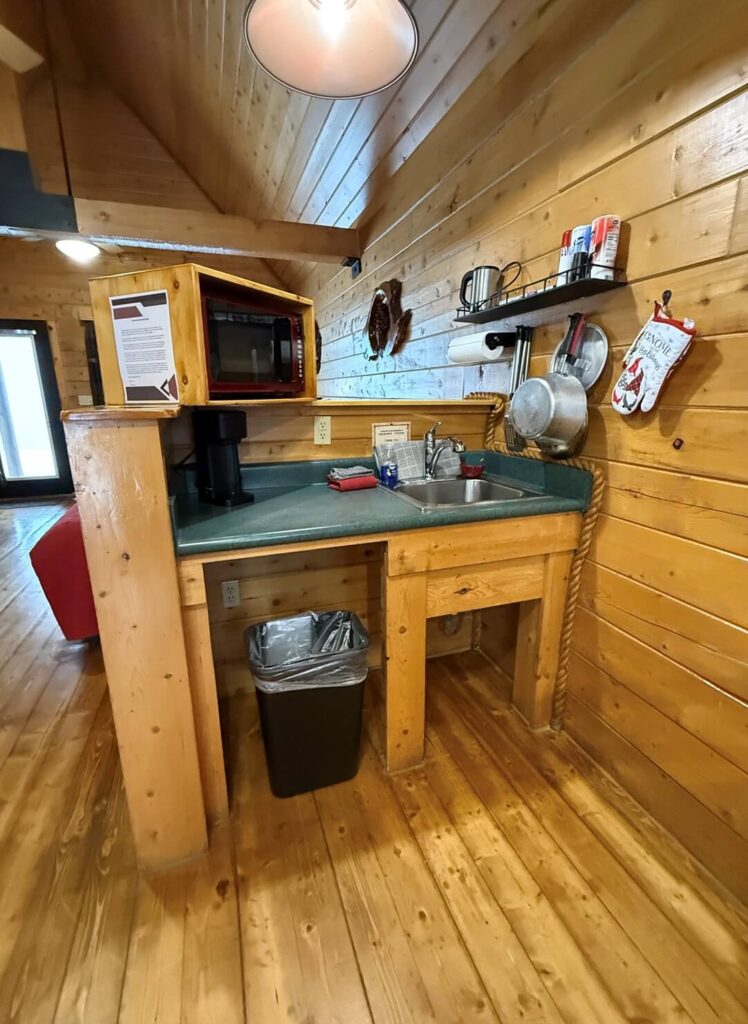
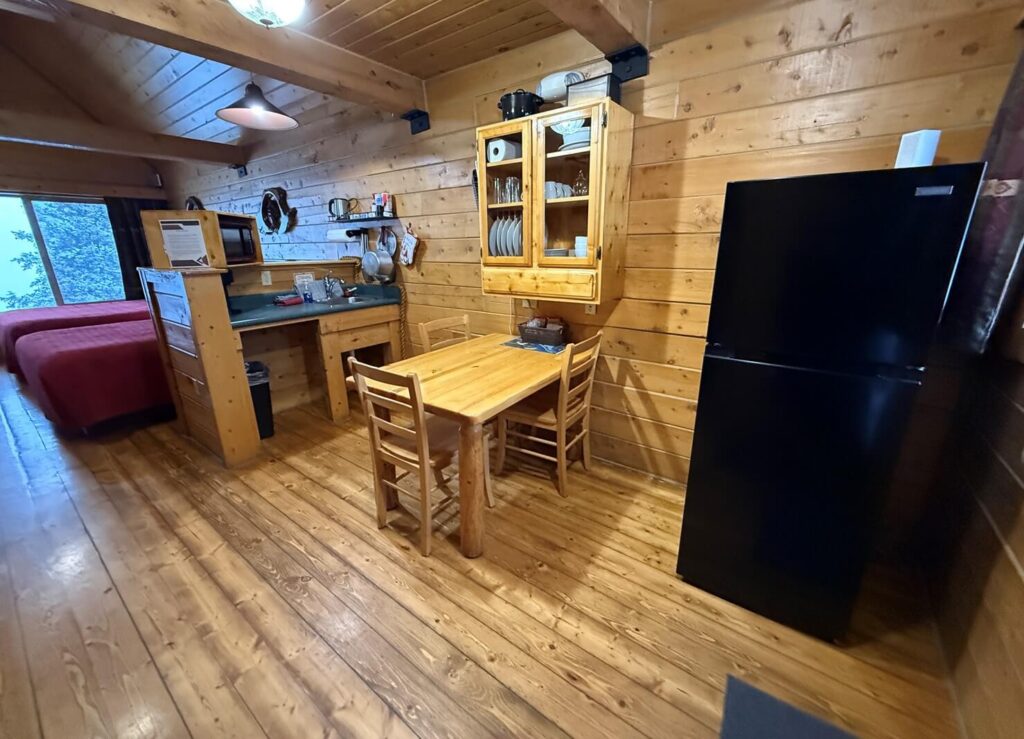
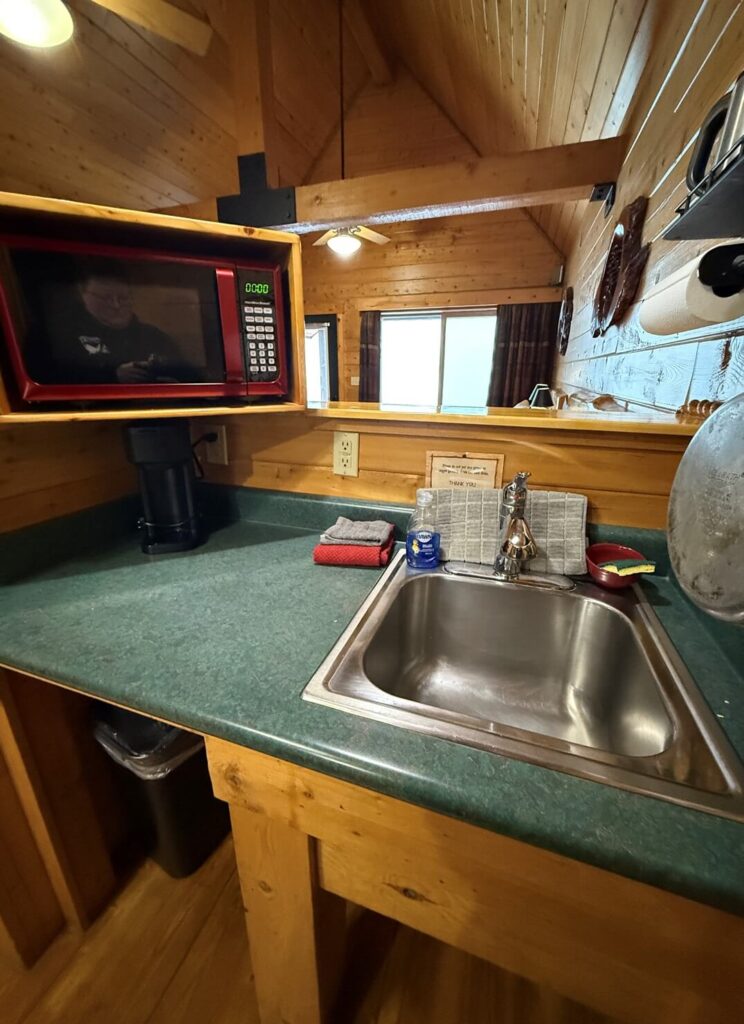
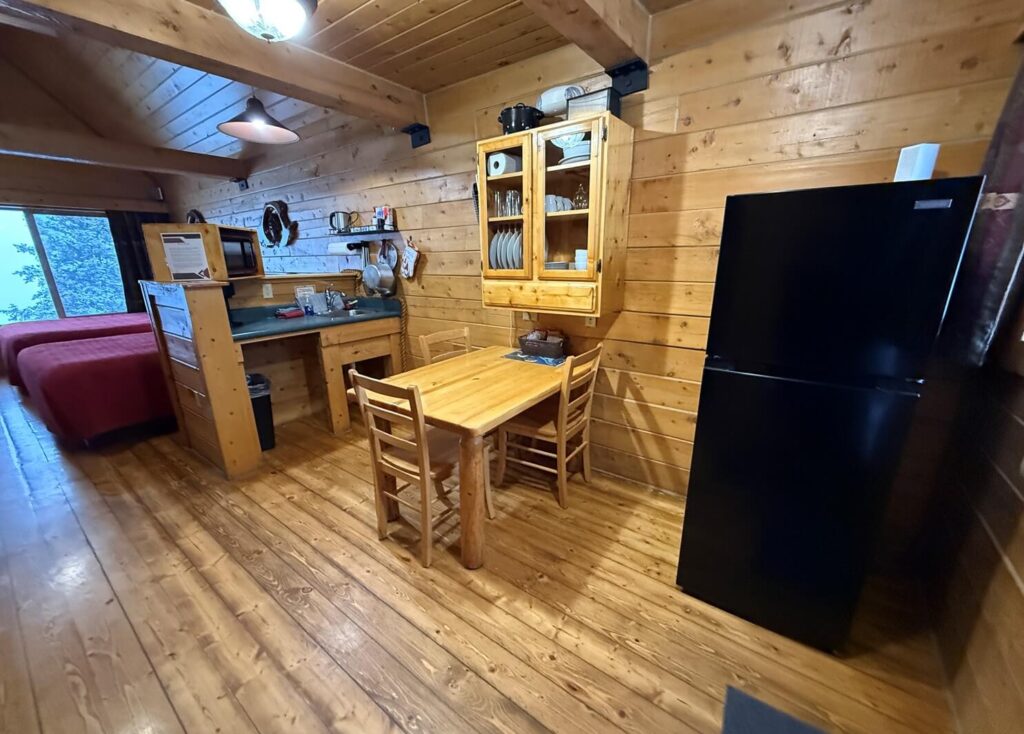
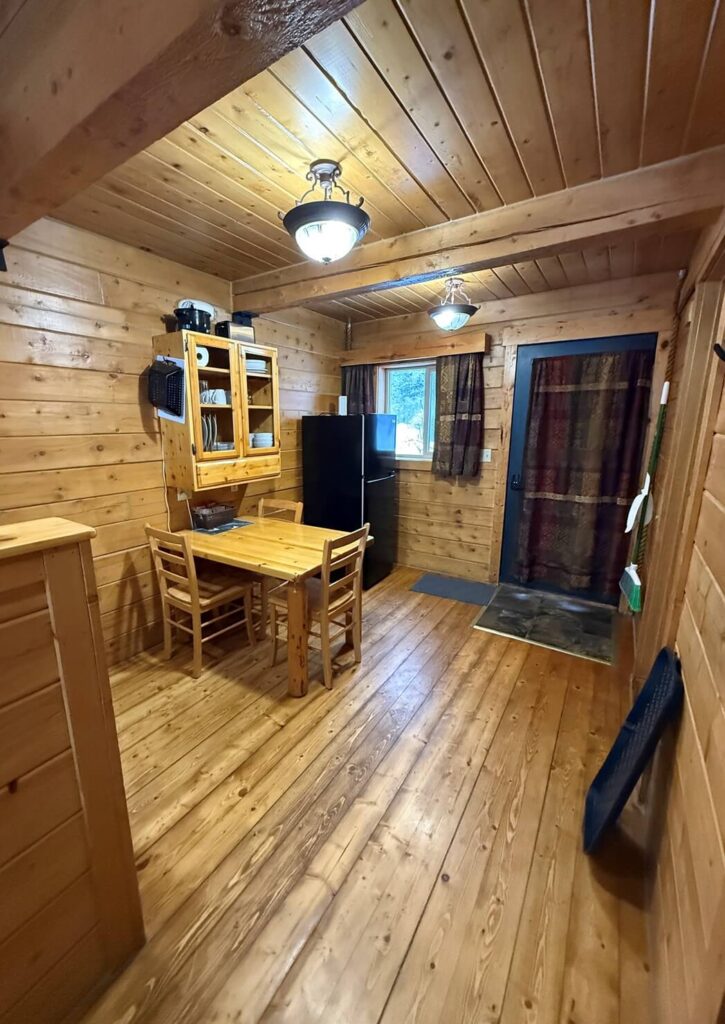
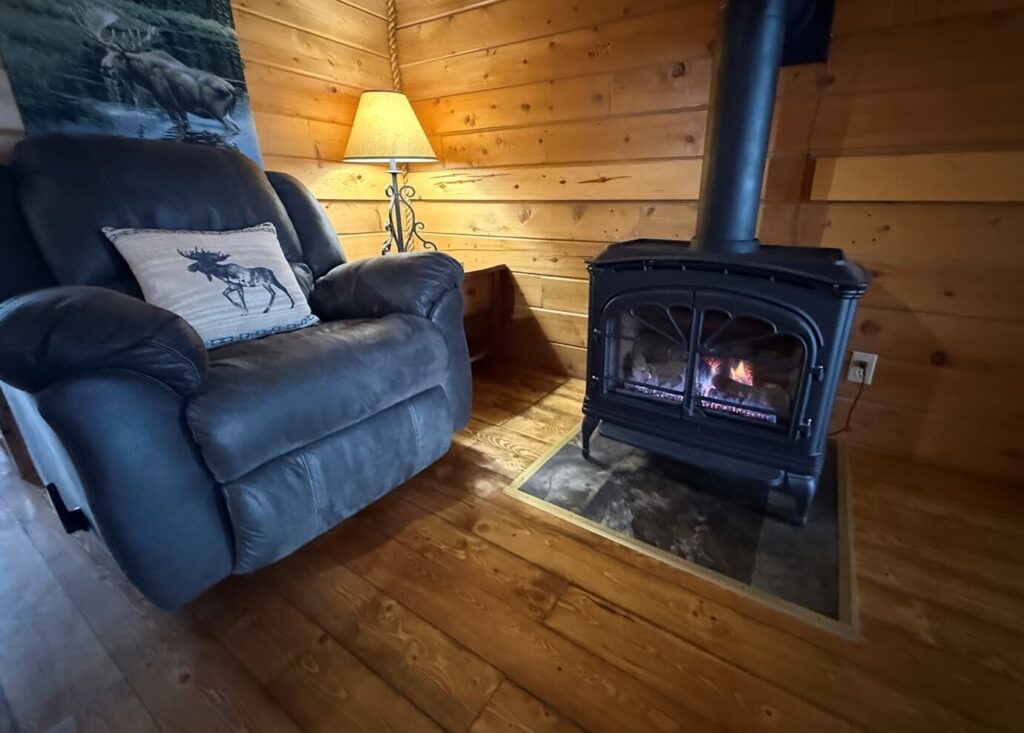
The Moose Cabin is a tribute to one of Alaska’s most incredible animals, a member of the deer family. Moose are known for many different attributes! Their size, long legs, foul temper, but one truly unique aspect is their aquatic abilities.
Moose are known for diving! Yes, diving! Typical distances are 10’ to 15’, but it has been reported that they can dive up to 20’. Why would a moose be diving, you might ask? This capability gives the moose a survival tool. They can dive deeper than other land animals to acquire aquatic plants. Calcium, sodium, and other nutrients reside in these plants that they need. This is especially true for bulls that have to grow those impressive antlers every year. However, those dives are not easy. The moose has hollow hairs in its coat that hold air. That is vital for those -50° winters, but not so good when you are trying to dive. Also, they have large lungs which enable them to hold their breath for up to a minute, but again, like the air in their coats, creates buoyancy. One other divine attribute is their passive closing nostrils, which close due to the water pressure. Of course, the deeper the dive, the more the pressure differential and the more firmly the nostrils close1.
Moose are also great swimmers. They have been known to swim for over 10 miles looking for food and to avoid predators. Olympic swimmers can sprint at a speed of around 5mph, but a moose would leave them in their dust at 6mph. I guess “dust” is not the best word here.
At 60°F temperatures, the moose’s body temperature needs to cool off. The aquatic ability gives them the option of cooling off.
The aquatic ability is also a great defense mechanism from predators such as wolves and bears. A moose can stand in deep water, be it a lake, sea, or river, due to those long legs, and let the currents in a river wash the predators away. With this knowledge, you would think moose should spend all of their time in the water or near the sea. However, killer whales have been known to feed on Moose2. With the ability to swim up to 35mph, moose would not stand a chance of getting away from an orca. So, while the sea may be a good option on a short-term basis, it is not a panacea.
Besides the ability to stand in rivers to thwart predators, those legs allow the moose to move through deep snow without subjecting their body mass to being dragged through the snow. Besides avoiding the loss of energy, it also helps keep them dry.
Like all of the members of the deer family, moose primarily avoid predators by fleeing. With a top speed of 35mph, they are not the fastest, such as Caribou, which can reach up to 50mph. Wolves are known to reach 45mph. So, one can see what a threat wolf packs are to a moose’s survival. But moose have great stamina, and their key to survival is to cover great distances at 22mph, thus outdistancing the pack.
A bull moose can reach 7’ at the shoulder and be 1500lb. While this is a formidable animal to meet in the woods, it also is a lot of meat on the hoof. It is a key resource for Alaskans and widely hunted in Alaska, providing an important source of meat. In 2022, over 2000 moose were killed to provide for Alaskans. This is a reasonable number when you realize the Alaska moose population in 2022 was 150,000 to 200,000. The Alaska permit system ensures the wildlife management of this valuable resource for future Alaskans.
Alaskan Moose populations are large but vary. Secondary forests, ones where logging or fires occurred is important habitat for them. Of course, they are widely dispersed in Alaska. Their population is cyclic depending upon the predator population. Their numbers decrease as the predator population increases, and then when the predator population falls, their population rises. Their prevalence across Alaska means they are often killed on the roadways. At a sprinting speed up to 35mph, they can quickly move from the tree line to the road. In the winter, the plowed roads are an easier path than through the deeper snow. Tragically, this results in more moose on the road. It is believed that up to 800 moose vehicle collisions occur each year3. While tragic for the moose and the people in the vehicles, the very practical Alaskans innovate. The state of Alaska has a Roadkill program, which allows Alaskans to sign up to harvest these kills on the roadways.
Finally, while moose seem docile and cute, to many, they are dangerous. Mother moose have no tolerance with anyone near their calves. Bulls can also be unpredictable. All moose stomp people to death, a terrible way to die. Moose can be found in city centers, as well as in the forest. This means more people are killed by moose than bears4. As the predator pressure builds, the moose often moves to locations where the predators fear to go, near humans. So, if you see a moose, stay away!
1 – https://biologyinsights.com/how-deep-do-moose-dive-and-why-do-they-do-it/
3 – https://www.adfg.alaska.gov/index.cfm?adfg=wildlifenews.view_article&articles_id=4089
4 – https://www.islands.com/1937234/alaska-animal-wildlife-deadler-grizzly-bear-how-avoid-encounter-moose/