
Amenities
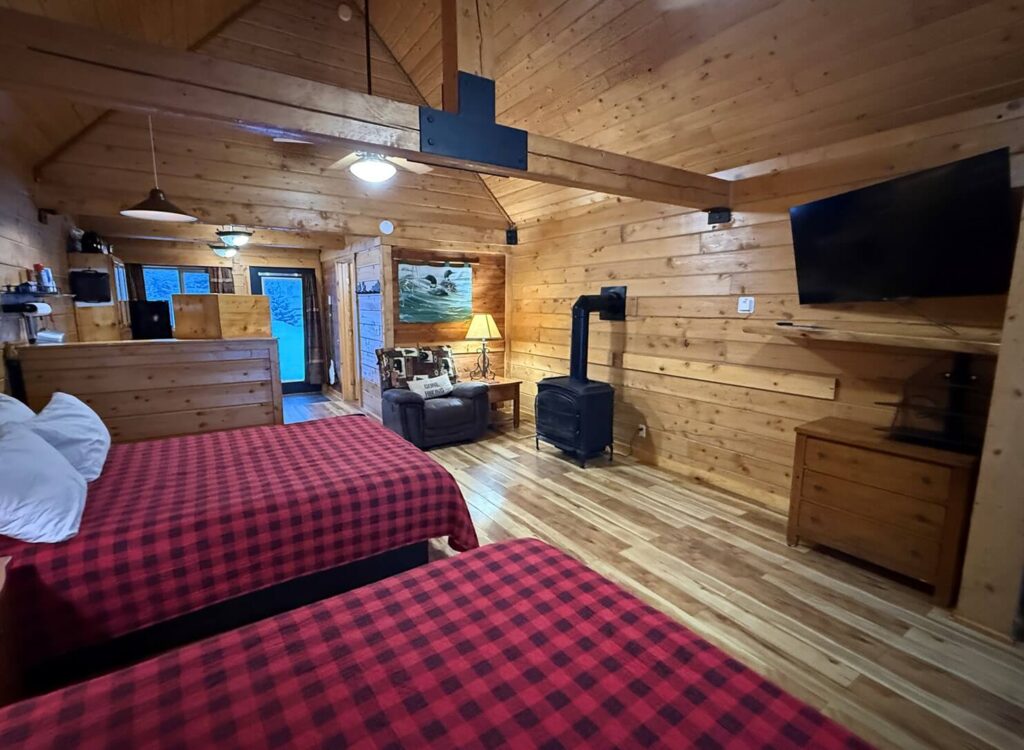
- 2 Queen-size beds
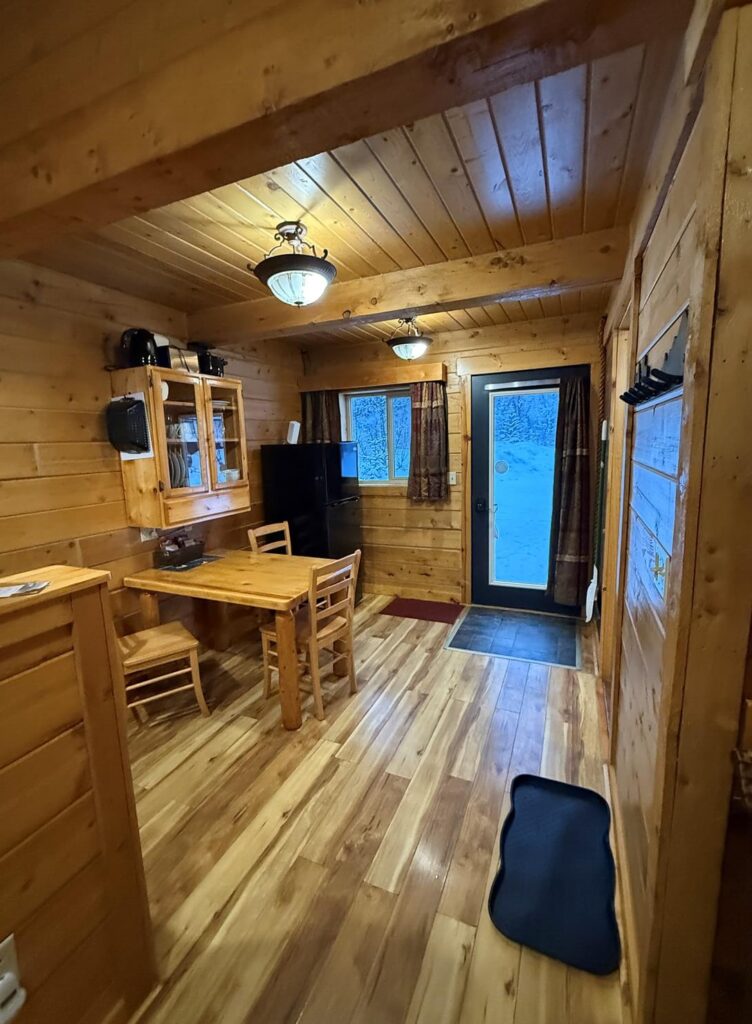
- Kitchenette with a full Refrigerator, cooking utensils, including pots and pans, with place settings
- Full bathroom
- Large screen 50” or larger TV with streaming
- Youtube TV
- Dining room with table and chairs
- Full Grill for each cabin
- 14’ Hot Tub for all 6 cabins
- Firepit
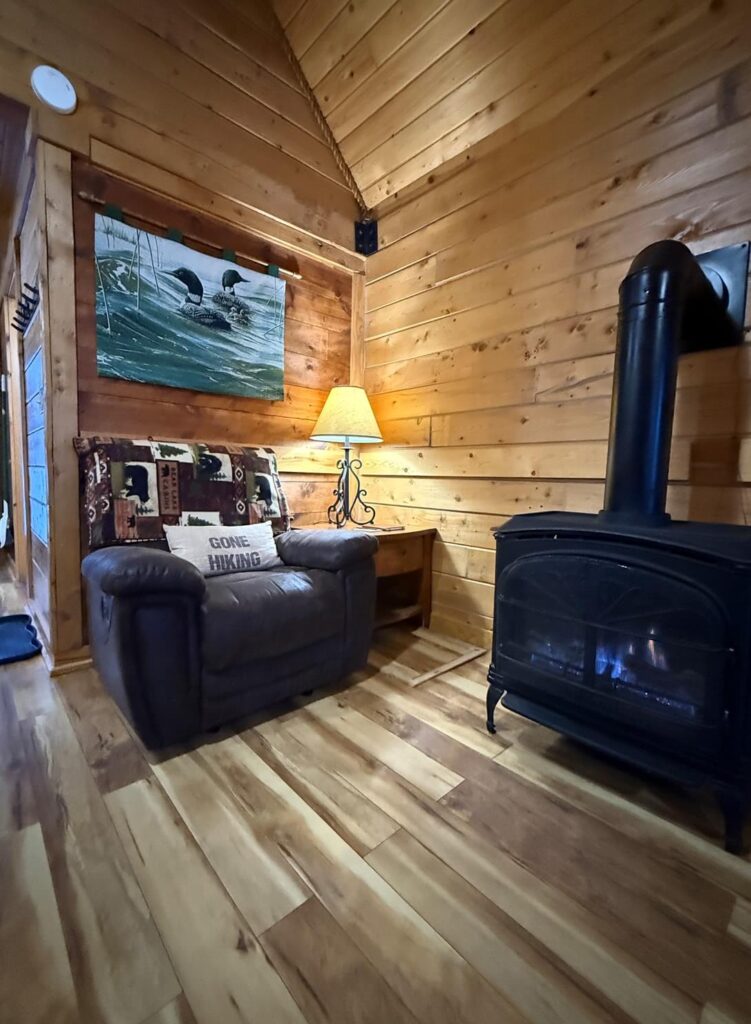
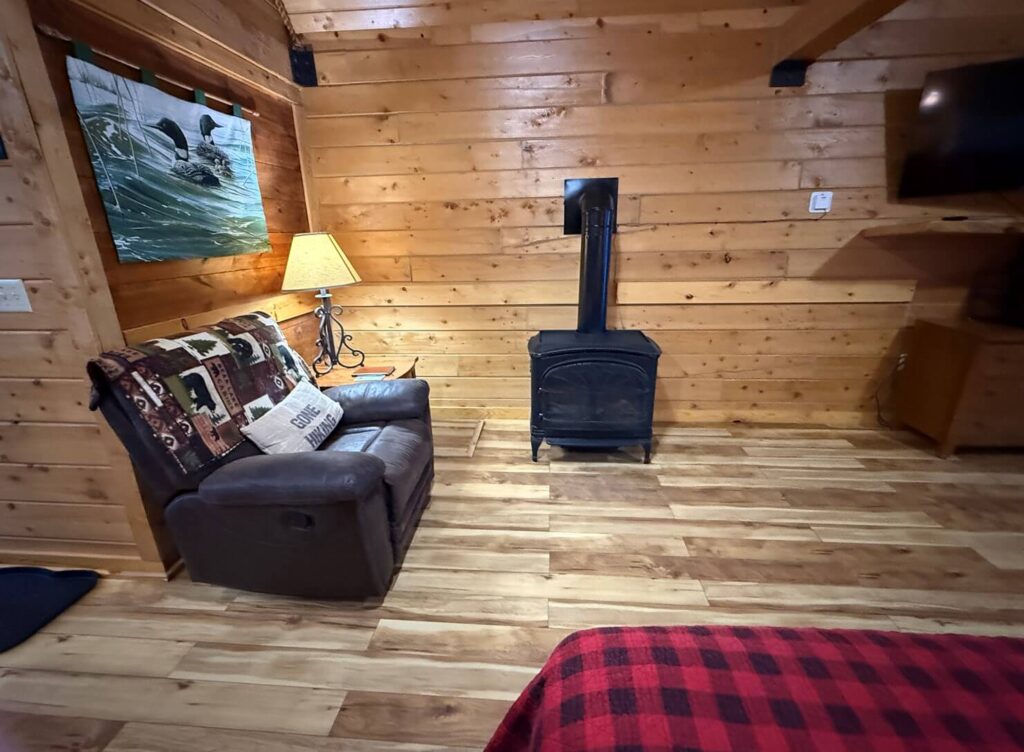
- Fireplace Appliance
- Back porch with chairs to enjoy the view
- Combined bedroom and living room
- Free Wifi
- Ocean view
- Free parking
- 457 sq ft
- Can sleep 5 with the 5 th using a provided rollaway
Click to enlarge Gallery:


Loons spend most of their time in coastal marine waters. All five species of the loon can be found in Alaska, where they migrate to breed, nest, and hatch their young in late spring once they reach sexual maturity at 2 years of age. These migratory birds are known as the “Spirits of the Wilderness. They are medium to large aquatic birds with bodies similar to ducks or small geese who spend the vast majority of their lives on the water. They are often confused with Cormorants. The white belly is a great way to distinguish the loon. The location of their legs being further back on their bodies means they are good swimmers and divers. They have been known to dive down to depths of 240’ and hold their breath for over a minute. Compared to their body mass, they have relatively small wings. This means they can take up to ¼ mile to get airborne. Despite this, they are good fliers and can reach 60mph. This flight ability means they can fly over 600 miles in a day. Their diet is primarily small fish, insects, frogs, and aquatic vegetation.
The five species of Loons are the Common, Yellow-billed, Red-throated, Pacific, and Arctic. While the Yellow-billed is the largest, it is the Common Loon that most people think of when they consider the Loon due to their haunting cry, which is unique to it. Relative to North America, they can be found in all 48 contiguous US states, besides Alaska, and also in Canada and Mexico.
Alaska’s Loons seek the clear, fresh water lakes for breeding and nesting. Since Loons primarily hunt by sight, the clear water lakes are prime locations for them. Loons are territorial, so it makes sense that they return to the same areas each year. Females usually survive territorial disputes, but up to 1/3rd of the larger males do not. For the Common Loon it is not uncommon for couples to not mate for life. Given the territorial battles, it is a good thing!
It is the male that picks the nesting site. Ideally, the site is close to the water’s edge and surrounded by water, such as an island. Both parents build the nest. In late May or June, usually a couple of eggs are laid, and both parents take turns incubating them until they hatch at around a month. The chicks are precocial, meaning relatively mature at birth with strong legs and feathers. By the 2nd day after hatching Young will leave the nest. They will ride on their parent’s back ½ time the first week. They are very dependent on the parents, with both parents feeding them. The young start flying in the 3rd month after hatching. This is vital since they will migrate south in September. Usually, it is only one chick that will survive to make this migration.
The unique calls of the Loon are heard in the summer, particularly during the breeding season. In the winter, they are mostly silent. Another interesting point is with regard to the name of “Loon”. There are a number of theories regarding the origin of the North American name “Loon”. Whether it is the Old English word lumme or the Scandinavian word lum, both indicate awkward or clumsy. Both are appropriate when one sees a loon walking on land. Perhaps this not being comfortable on land reflects why the Loon basically only gets on land to breed and nest.
Overall, the loon population is decreasing. Two factors that contribute to this are the predators and nesting. With the nests being close to the water’s edge, nests can become flooded by watercraft, and chicks drown. The Loon also has multiple predators, fox, gulls, and jaegers.
A key for all of us is to give the Loon’s nest a wide berth and during the nesting time, stay away from them and do not disturb the nests.
Loon information sources:
https://www.adfg.alaska.gov/static/home/library/pdfs/wildlife/research_pdfs/loons_alaska.pdf
https://www.fws.gov/office/alaska-migratory-birds/loons-and-grebes