
Amenities
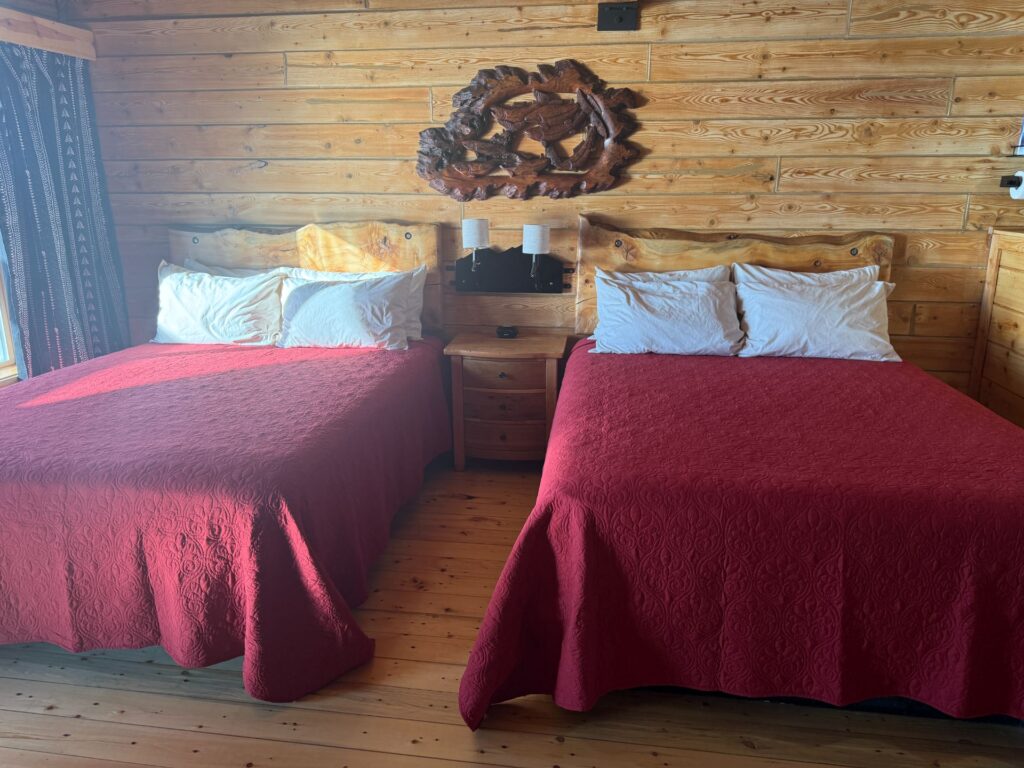
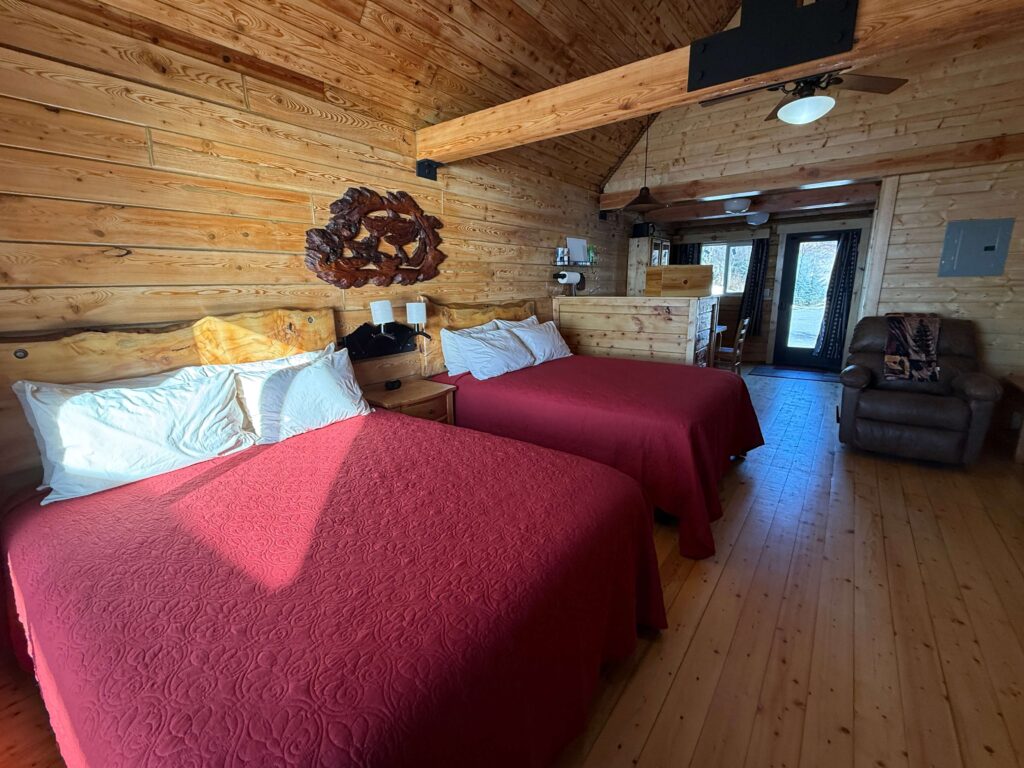
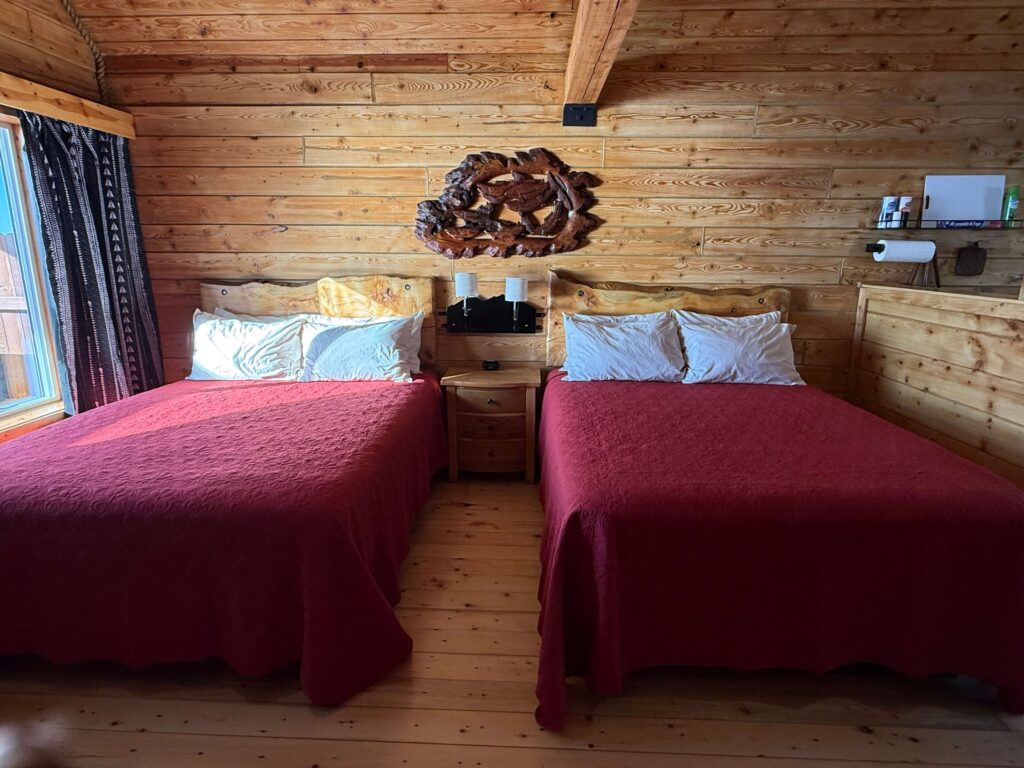
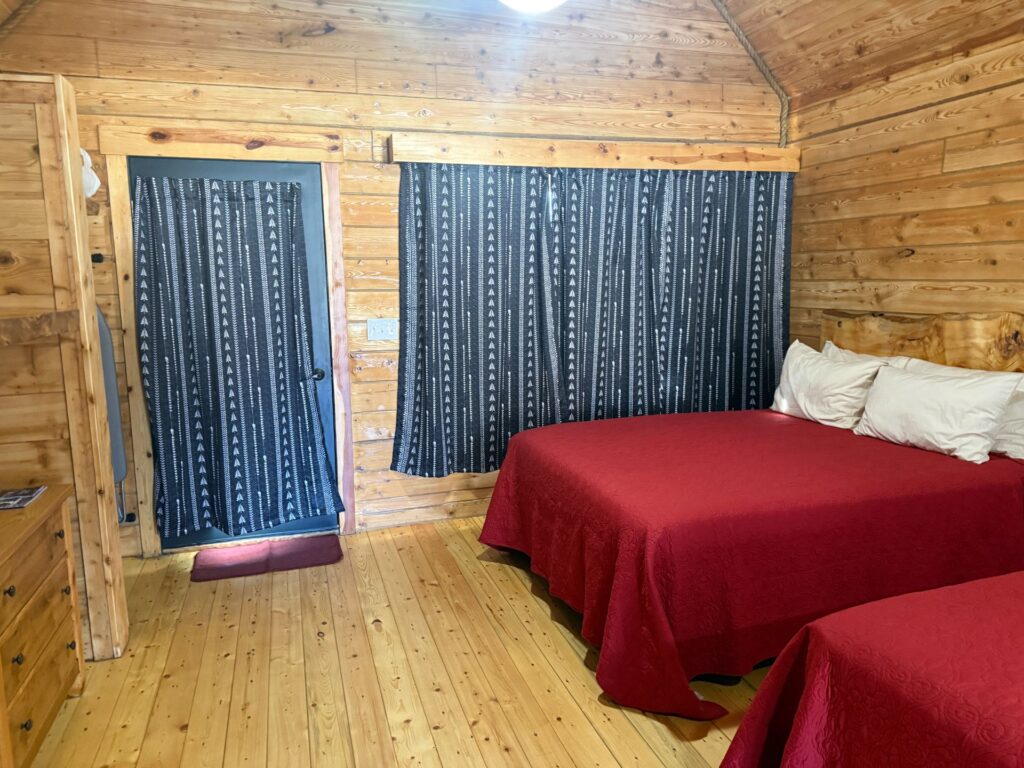
- 2 Queen-size beds
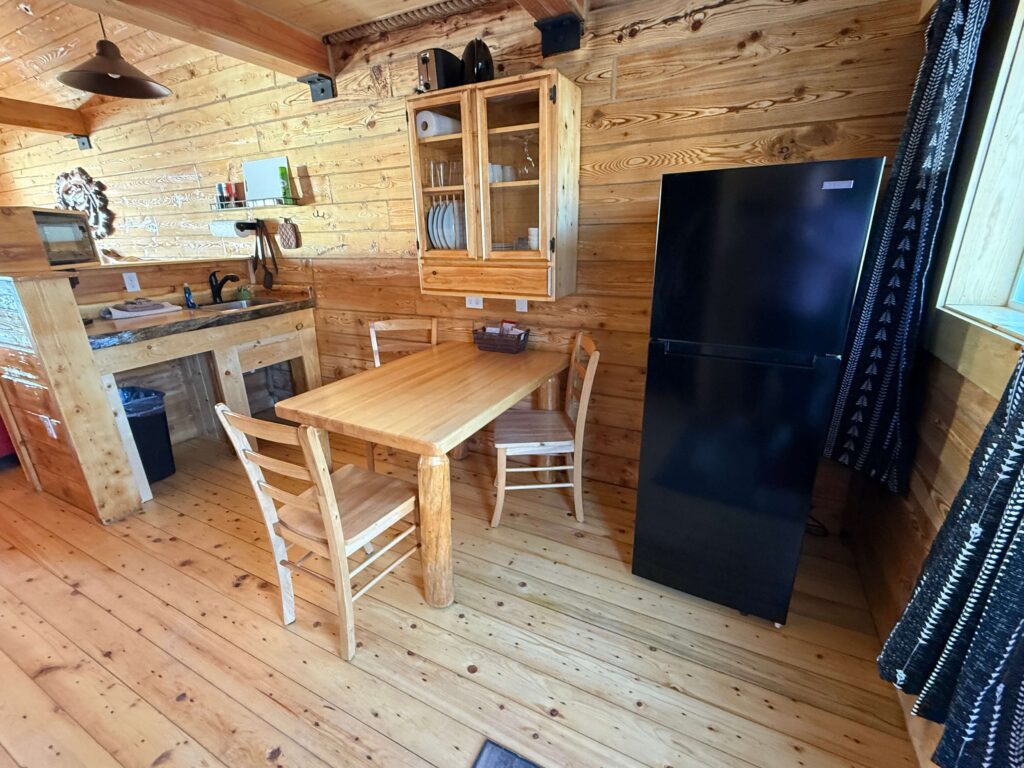
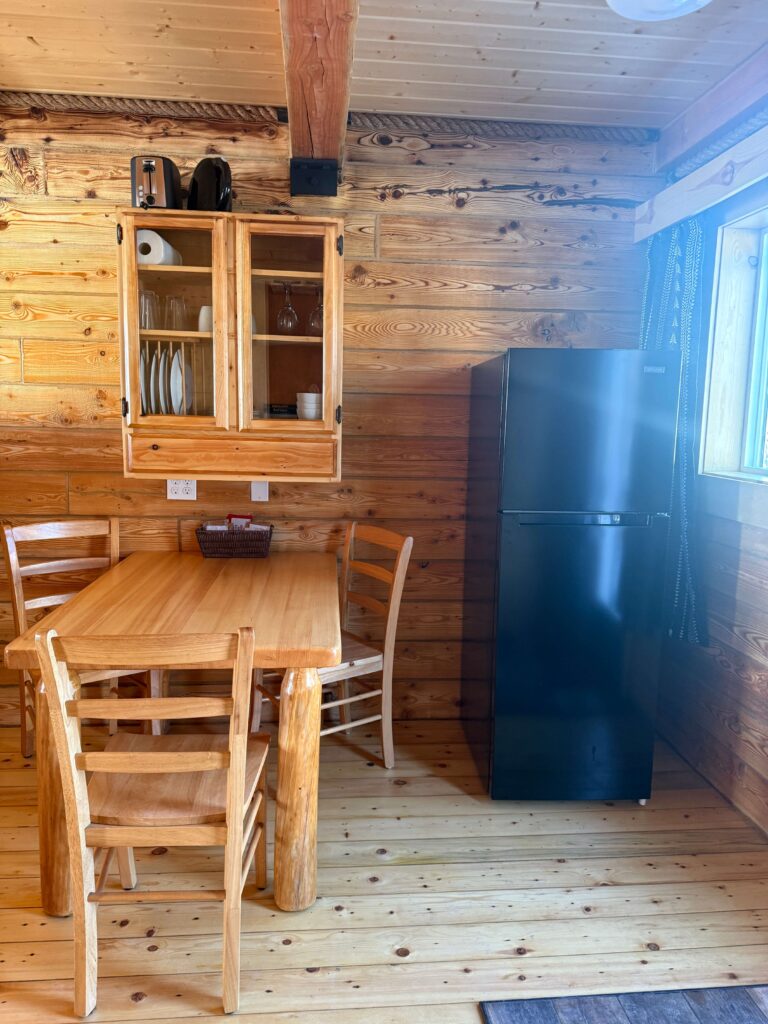
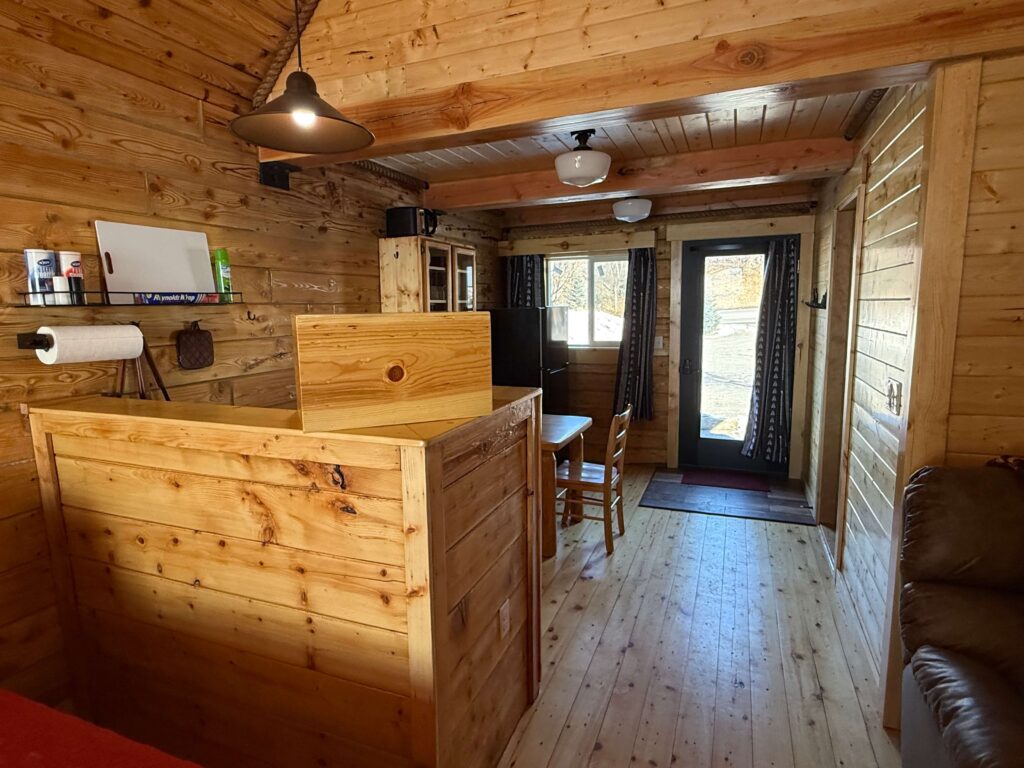
- Kitchenette with a full Refrigerator, cooking utensils, including pots and pans, with place settings
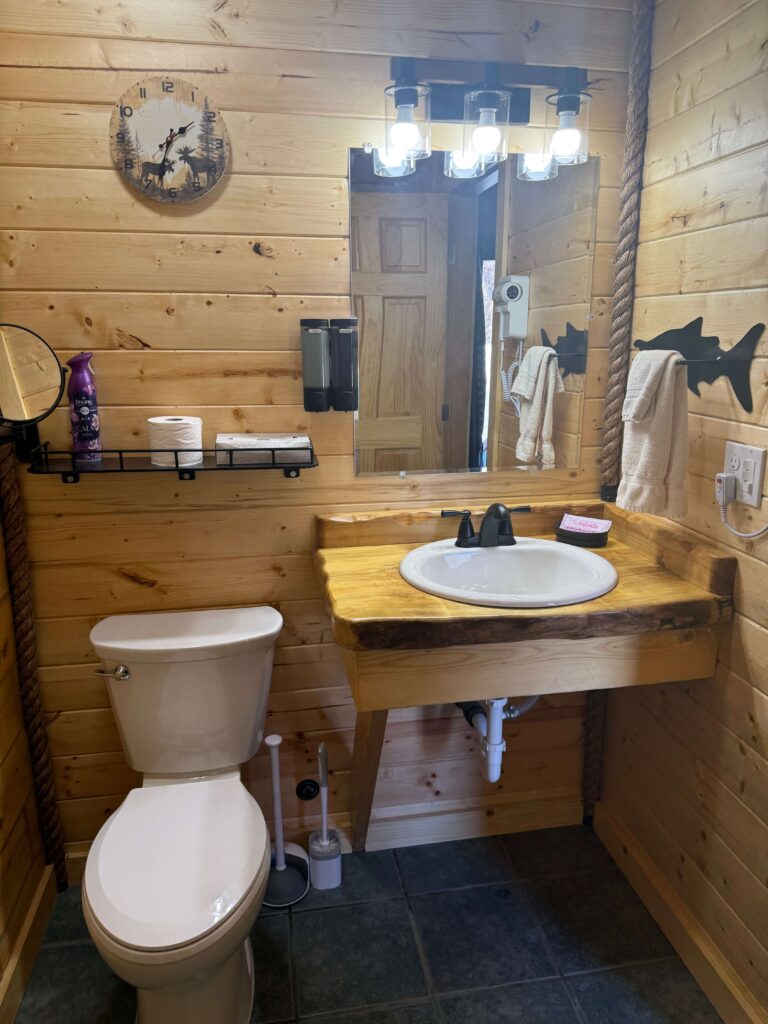
- Full bathroom
- Large screen 50” or larger TV with streaming
- Youtube TV
- Dining room with table and chairs
- Full Grill for each cabin
- 14’ Hot Tub for all 6 cabins
- Firepit
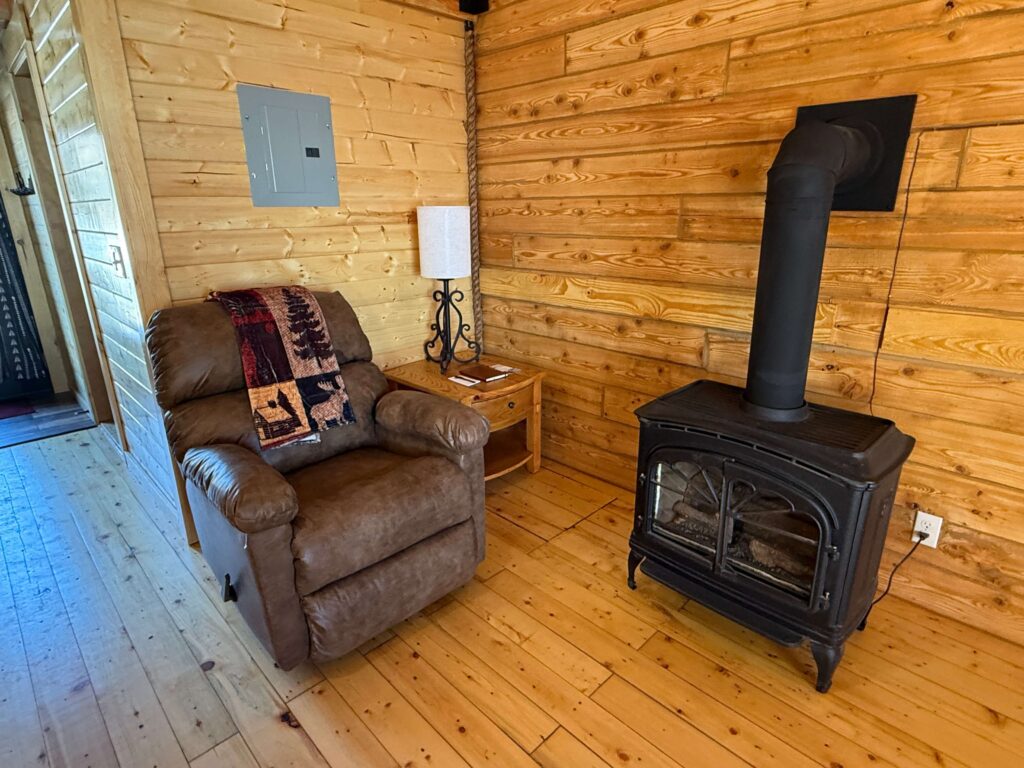
- Fireplace Appliance
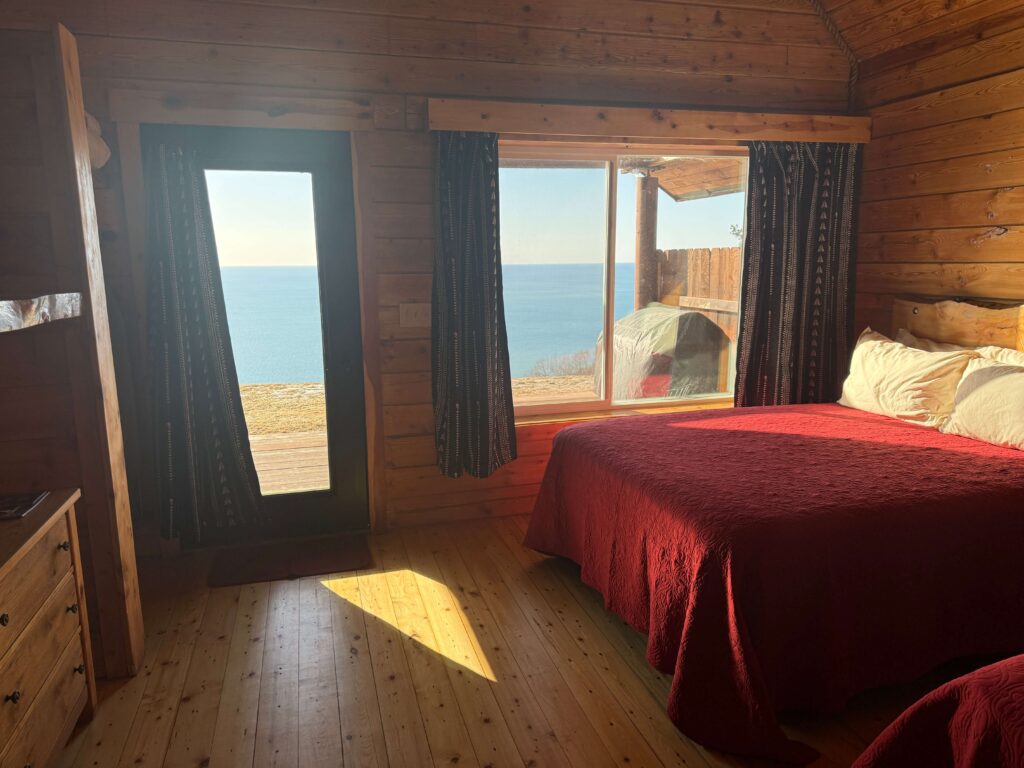
- Back porch with chairs to enjoy the view
- Combined bedroom and living room
- Free Wifi
- Ocean view
- Free parking
- 457 sq ft
- Can sleep 5 with the 5 th using a provided rollaway
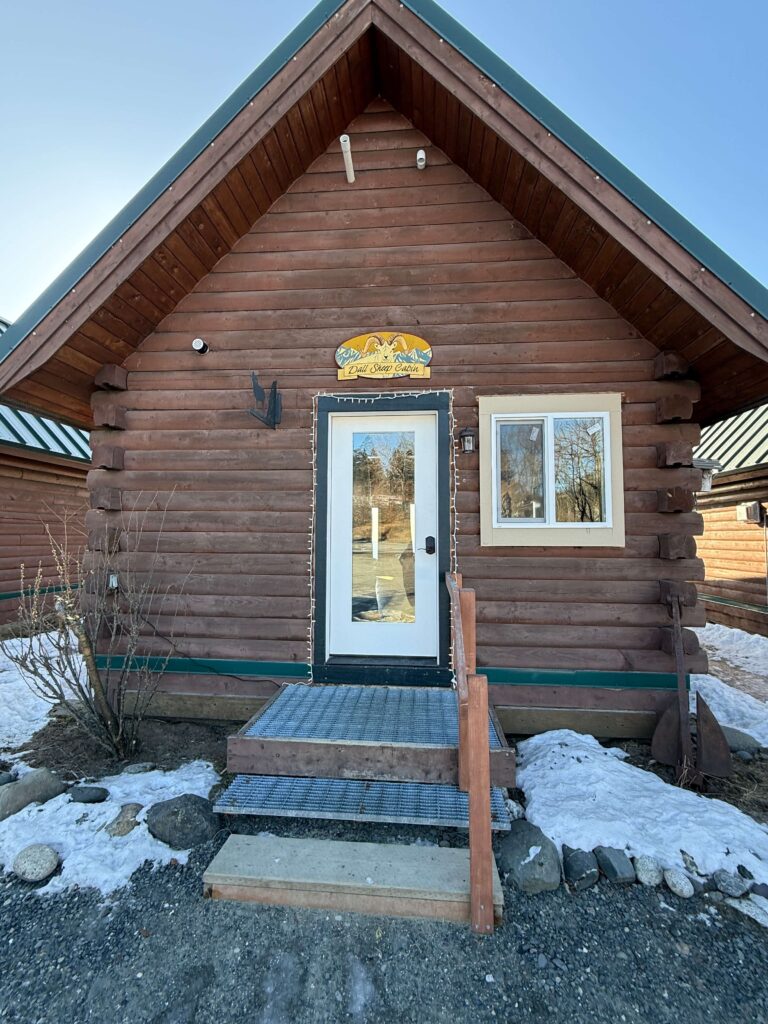


When one thinks of the Alaska mountain ranges, it is impossible to consider them without thinking of the majestic Dall sheep. With an Alaska population averaging around 45,000 sheep, the mountains provide the sheep with food, but more importantly, a safe escape route from predators. Dall sheep are predominantly above the treeline, so these cliff faces are an obvious place to go. Their predators are wolves, bears, eagles, wolverines, and coyotes. Their diets are made up of grasses, sedge stems, lichen, and moss.
Dall sheep are very sociable. However, the herds are separated by sex. The ewes (females) with the young and rams (males) do not group together. The exception is, of course, during rut. Both herds have a hierarchy that is established by the jousting/clashing that occurs within the sexes, including the females. These clashes occur year-round but are more often occurring when strange males encounter each other when pursuing the female herds during rut and needing to establish hierarchy, who is the top ram! Sexual maturity is at the age of 18 months. However, it is usually the dominant ram that does the breeding.
The Rams are quite spectacular, reaching 300lb and 3.5’ at the shoulder when fully mature. Contrast this to the 150lb ewe. While both sexes have horns, the females are relatively straight and short. Of course, the ram’s horns, not antlers, are the most signature aspect of the Dall ram. The horns (since they don’t shed), which grow throughout their life, have a growth rate that varies. It starts up in the spring and grows throughout the summer, then slows in the fall and stops altogether in the winter. This pattern of growth results in rings on the horns, which can be used to determine their age. The ram’s horn shape and size are usually distinguishable from the ewes’ at around 3 years of age. The horns grow in a full circle, usually by the age of 8, which is the requirement to be able to legally hunt them in Alaska. The migration of the young males from the ewe herd to the ram herd often occurs at mineral deposits. All of the herds will congregate here to eat the soil, which is nutritionally rich and needed. It is during these random interactions that the young rams will move to the ram herds.
There has been a known collared Dall sheep that lived to be 22 years old but a more common old age is 12. Annual survival rates for adults is 87%. An obvious reason for death is predation. Their horns are used for defense, but their primary defense is to take to the cliff face. A Dall sheep’s top speed is 30mph, while a wolf’s top speed is 45mph; it is clear why the cliff faces are truly a sanctuary. Their unique hooves with sensitive pads in the middle enable them, even as lambs, to stick on surfaces that predators cannot. They are also great leapers. A 12-foot leap has been recorded.
The one-year ewe mortality of 13% is made up of some interesting reasons. As one would expect, the harsh winters, disease, and of course, predators take their toll. A surprising fact in one Chugach Mountain range study was that the 13% mortality rate, almost half of the deaths 6% was due to avalanches, and 1 to 2% of the remaining 7% was due to wolverines. The Chugach study referenced found fewer predation deaths than other mountain ranges in Alaska, with 1 in 4 to 6 adults and 1 in 3 lambs taken by predators in a year.
One-year Lamb mortality can be exceptionally high, as Arthur 2003 and Scotton 1998 studies found 90% mortality with 47% by coyotes and 30% by eagles. In other studies, it was found that the yearly lamb one-year survival rate could vary from a high of 66% to a low of 9%. Coupled with this fact, pregnancy rates vary from 96% to a low of 18%. Then one can see that having a managed population is key to their long-term survival.
Alaska Dall sheep season starts in early August and goes to late September. There is an average of hunter harvest of 914 rams. A 230lb ram will generate 80lb of meat. While this may sound like a lot, when one considers the difficulty in getting to the rams and getting the meat out, it is not the reason people hunt this elusive animal. Non-residents are required to hunt with a guide or be accompanied by an Alaska Resident relative. A guided hunt, permitting, and associated costs, excluding travel to Alaska, can exceed $30,000. That works out to $375 a pound for the 230lb ram. Not what one would call a bargain.
The Alaska Dall sheep season is very well managed. There are drawing hunts/lottery for residents and non-residents, and Tier II subsistence hunts. All hunts are managed. 50% of the harvested rams occur in the first 10 days, with the majority of that 50% occurring in the first 5 days. So, the early bird catches the worm. A typical hunt lasts for 5 days.
As noted in the bibliography below, the Alaska government monitors and studies the Dall sheep and the hunts annually. While there are usually twice as many residents that hunt the Dall sheep, the residents of Alaska only account for about 57% of the harvested rams. This is probably due to the fact that non-residents have proportionally more guided hunts. At over $30,000 for total outlay for a 10-day guided hunt, you would hope so!
While the Dall sheep population has declined recently, there is a history of cyclic activity. There are a number of reasons for this: the severity of the weather, the predator density, disease, and the local habitats’ nutritional value all contribute. As an example, one area in Alaska, 14C in the Chugach mountains had an estimated 900 to 1100 Dall sheep in the 70’s and early 80’s, 2000 to 2100 in the late 80’s through 2000, but then down to 900-1000 in 2007 through 2011, then back up by 10% from 2014 and 2015 to 1000-1100. Clearly, the wise management of these exquisite animals is warranted so that we can enjoy them for years to come.
- https://www.adfg.alaska.gov/static/applications/web/nocache/species/speciesinfo/dallsheep/pdfs/chugach_range_dalls_sheep_research.pdf0EFD2D9EE22249846CB36BDA8F2117D1/chugach_range_dalls_sheep_research.pdf
- https://www.adfg.alaska.gov/index.cfm?adfg=dallsheep.main
- https://www.adfg.alaska.gov/index.cfm?adfg=sheephunting.main